



-
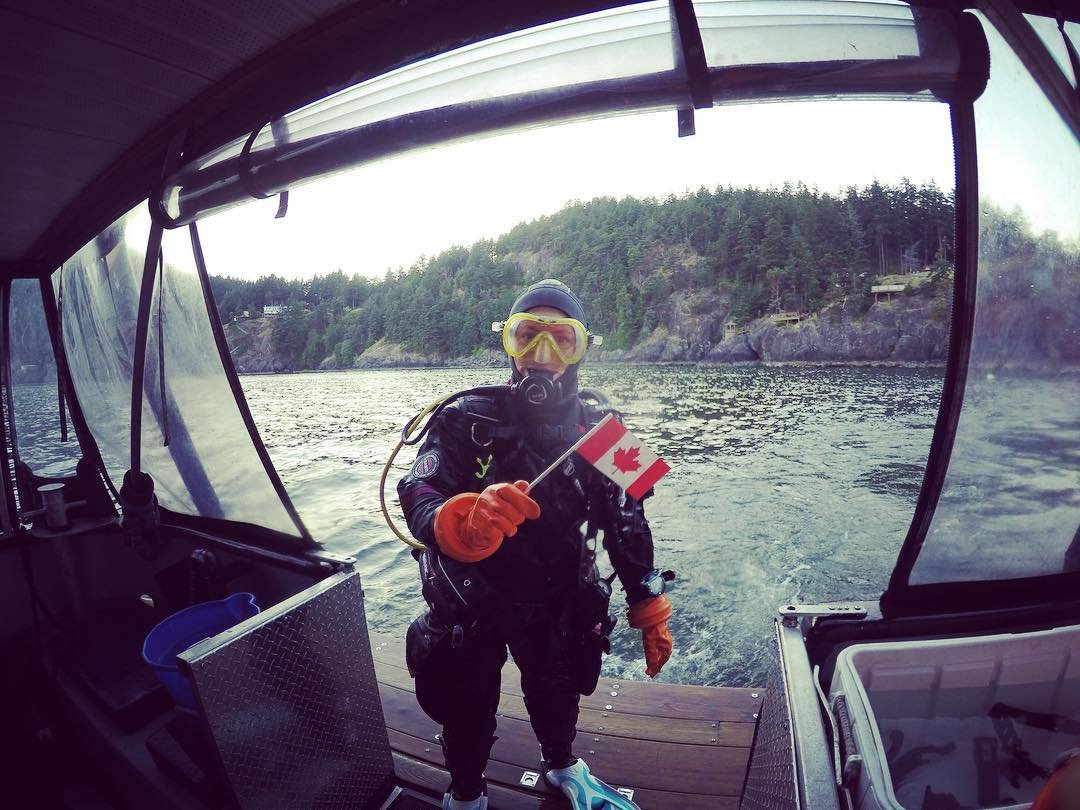
Annapolis wreck, easy shore dives, giant plumose anemones, lingcod, sponges.
-
October - March for best visibility (winter diving!)
-
Shore diving at Whytecliff Park, Kelvin Grove, and Porteau Cove. Charter diving at Annapolis Wreck and other Howe Sound locations.
The Vibes
Vancouver is the populous hub of British Columbia, the main city in the Province. It boasts modern buildings, waterfront areas, beaches, and parks. But the main draw to Vancouver is the nature - rugged mountain views can be seen from all throughout the city, and many hiking trails are easily accessed from North and West Vancouver - along with 3 ski resorts! Squamish (the “outdoor recreation capital of Canada”) and Whistler are also just a 1-2 hour drive north along the Sea to Sky highway. This proximity to nature is represented in the vibes of the area, with plenty of people into outdoor activities (including a strong dive community) and a laid back attitude present throughout the region.

Good to Know
Diving in Vancouver essentially means diving in Howe Sound, which is a 42km long fjord that extends northwards from West Vancouver and the strait of Georgia up to Squamish. There are several options for shore diving where you could easily guide yourself (Whytecliffe Park, Porteau Cove). However, the sites are outside the city where public transport is lacking, and are not within walking distance of dive shops. If you want to do your own shore-diving, having your own car or a rental is a must.
Average prices:
Mid-priced meal = 25-40 CAD
1 day boat charter (2 dives) = ~200 CAD
Shore diving = Free! (tank rental 15 CAD)
Top Tips
It can be very dark underwater in Howe Sound, even during daytime dives, so be sure to bring a good dive light with you to get the most out of the diving.
The parking at shore dive sites can get busy quickly, especially in the summer and on weekends with tourists heading out for beach days. So the earlier you head out for a dive, the better, or avoid the weekends if you can.
Howe Sound Diving
Overview:
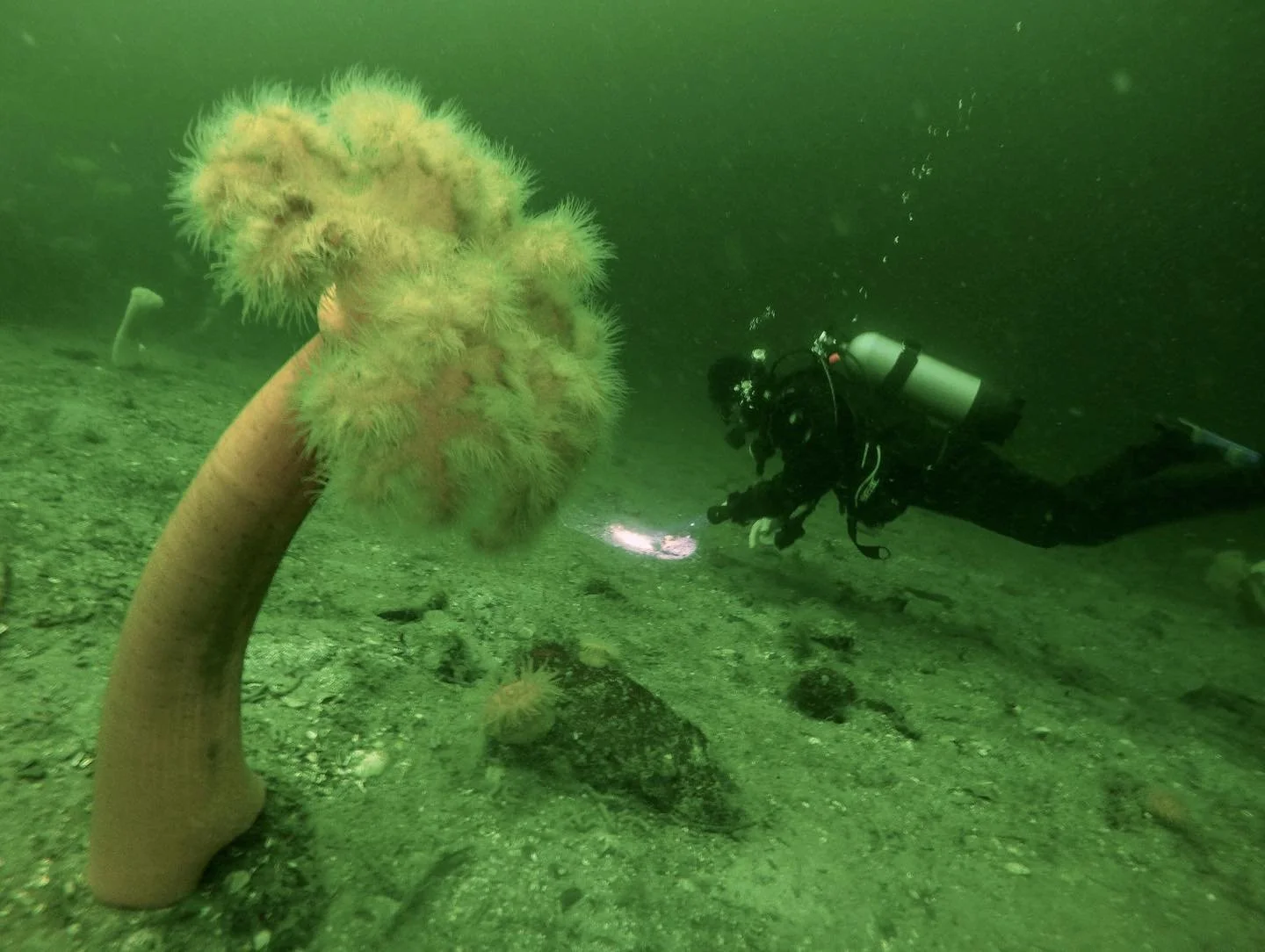
Howe Sound is a UNESCO Biosphere Region which highlights the spectacular beauty and biodiversity found above and below the water. As a fjord, much of the shoreline of Howe Sound is steep walls in deep water. However, there are also some shallow sloping bays, islands, and underwater rocky outcrops which provide nice diving options.
How to get there:
Vancouver International Airport is located south of the city. You’ll then need a rental car to access the dive shops which are within the city, or at Horseshoe bay (West Vancouver) and the dive sites which are north of the city in Howe Sound.
Exposure suit:
A drysuit is recommended year-round for comfort and a non-negotiable in my opinion for winter diving. Temperatures can be as low as 4-6°C in January, and up to 10-12°C in August. Divers unfamiliar with drysuits must take a drysuit course first with a qualified instructor, as improper use of a drysuit can pose a serious safety risk. Drysuit courses can be taken with one of the local dive shops, which involves an hour or so pool session and open water dives. Most dive shops also offer drysuit rentals to certified drysuit divers.
Visibility:
The best visibility for diving in Howe Sound is in the winter (October-Feb/March), when the cold water temperatures prevent algae blooms. Howe Sound is also subject to inflow from glacial rivers - so once freshet begins in the spring, the visibility begins to progressively get worse (especially the further up the Sound you go towards Squamish and the mouth of the Squamish River). Many local divers still dive in the summer; better visibility can sometimes be found at depth, in the cooler, saltier water.
When to visit:
For the more serious, or experienced drysuit divers and photographers, a winter trip to Vancouver/Howe Sound will reward you with excellent visibility. You could then combine a dive trip with a trip to some of Canada’s world-class winter sports destinations (such as Whistler, or Cypress or Grouse ski hills in Vancouver).
Guided dives:
Unlike Vancouver Island diving, currents are a little less of a concern in Howe Sound and there are some easy shore dives like Porteau Cove and Kelvin Grove where, with a bit of basic underwater navigation skills, you should be fine without a local guide. However, when in doubt, always hire an experienced dive guide who is familiar with the site. If hiring a tank or other gear from one of the dive shops, you can always ask them for tips about the dive sites, or for the latest visibility info.
-
Sea Dragon Charters are located in West Vancouver (Horseshoe Bay) with a well stocked Expedition Centre and a 40’ customized dive vessel in the marina. They are the closest shop to some of the best dive sites in the area (Whytecliffe Park, Porteau Cove, Kelvin Grove) and the furthest north - so if you’re coming from Squamish/Whistler, they’ll definitely be the shop for you. They also offer snorkel boat trips for non-divers. I have both worked at, and been a customer of, Sea Dragon and I highly recommend them!
-
International Diving Center are located in the Kitsilano neighbourhood, about 10 minutes south of downtown. They offer courses, rentals, sales, and guided dives. Check out their calendar of guided dives (usually on the weekend) locally and further afield.
-
Located in Kitsilano, south of Downtown. A full service dive shop that offers group guided dives every weekend as well as private guided trips, including pick up from your accommodation.
-
VSDS do not have a physical shop, but they do offer courses, rentals and guided shore dives 7 days a week. They offers free pick up/drop off in the downtown Vancouver area, so they’d be a great option if you want to stay in the city, not use a rental car, and enjoy some guided shore dives.
-
Scuba MUDS - Meet Up Dives Vancouver are not a dive shop, but an inclusive community of divers that offer group shore dives and dive charters to the local sites on weekends and Wednesday evenings. The MUDS would be a great option if you have your own dive gear and just want to socialise with the local dive community and meet some like-minded folk.
Dive Providers
A good handful of dive shops can be found in Vancouver, south and east of the downtown area in Kitsilano, Burnaby, and further out in Surrey. The closest one to all the best dive sites (in my opinion) is found in Horseshoe Bay, in West Vancouver. These are the shops that I have personally experienced or that come well recommended:
-
If you want to experience some city life, you’ll want to stay in the heart of it all in Downtown Vancouver. Here will be plenty of hotels to choose from, though the price tag will be higher here. Parking may be tricky in Downtown, if you’ll be using a car.
-
Kitsilano is a Vancovuer neighbourhood outside (SW) of downtown. It has more chill, artsy vibes with a sandy beach, parks, and plenty of coffee shops. You can find some hotels and Air BnBs here. International Diving Center is in the Kitsilano neighbourhood.
-
Horseshoe Bay (HSB) is a small village in West Vancouver, and the home of the BC Ferries terminal to Bowen Island and Vancouver Island. There is a motel and some Air BnB options here. HSB is home to Sea Dragon Charters, and closest to Whytecliffe Park dive site and all the other shore entry sites along the Sea to Sky highway. HSB has several pubs and coffee shops, perfect for some post-dive nourishment while you flick through a PNW marine ID book.
-
Squamish is at the head of Howe Sound, only about 30 minutes drive north of Horseshoe Bay along the gorgeous Sea to Sky Highway (perfect for popping down to Sea Dragon for all your diving needs). If you want to combine your dive trip with some land-based action sports, Squamish would be a great base for you. There are several good hotels here with plenty of parking, and a handful of good cideries, breweries, and taphouses for post-sport drinks and food. And don’t forget about the 360 degree mountain views! Best to have a car if staying here as public transit between Squamish and Vancouver is lacking.
Where To Stay
Where you choose to stay will depend on the vibes and the other non-diving activities you wish to partake in. From city activities to nature, beaches, and breweries, there is a variety of options in and around Vancovuer.
Land-based Fun
A trip to the Vancouver area can pretty much be curated to deliver whatever kind of adventure you want - from city life to beach vibes, or rugged mountain experiences.
-
Downtown Vancouver is an interesting little city, mixing nature with modern city life. With views of mountains and ocean all around, you can get your fix of shopping, museums, and restaurants. Be sure to check out the neighbourhoods of Gastown, lower Davie Village, Yaletown, Waterfront, Granville Island, and of course the famous Stanley Park and the seawall walk.
-
The unique thing about Vancouver is that it is surrounded by nature and wildnerness. You can drive 20 minutes and be at a trailhead in to the mountainous backcountry. Whether you make your dive trip to Vancouver in summer or winter, you will find a ton of mountain sports to keep you occupied. In the summer and fall, you’ll find trail heads for hiking and mountain biking in North and West Vancouver and Squamish, as well as rock climbing, paragliding, and white water kayaking in the stretch from Squamish to Whistler. In the winter, you’ll find slack and backcountry ski touring routes and snowmobile areas, as well as several ski resorts.
Just remember that most of these recreational areas lack cell reception. Conditions can change quickly, and wildlife can always be encountered. So be trail smart, be prepared, and always tell someone where you are going.
Whytecliff Park
West Vancouver - Horseshoe Bay
A very popular dive site. There is a fairly large parking lot, washrooms, and an outdoor shower for rinsing your dive gear! The park is also popular with non-divers so parking can sometimes be tricky to find on weekends. I believe the parking is now paid parking
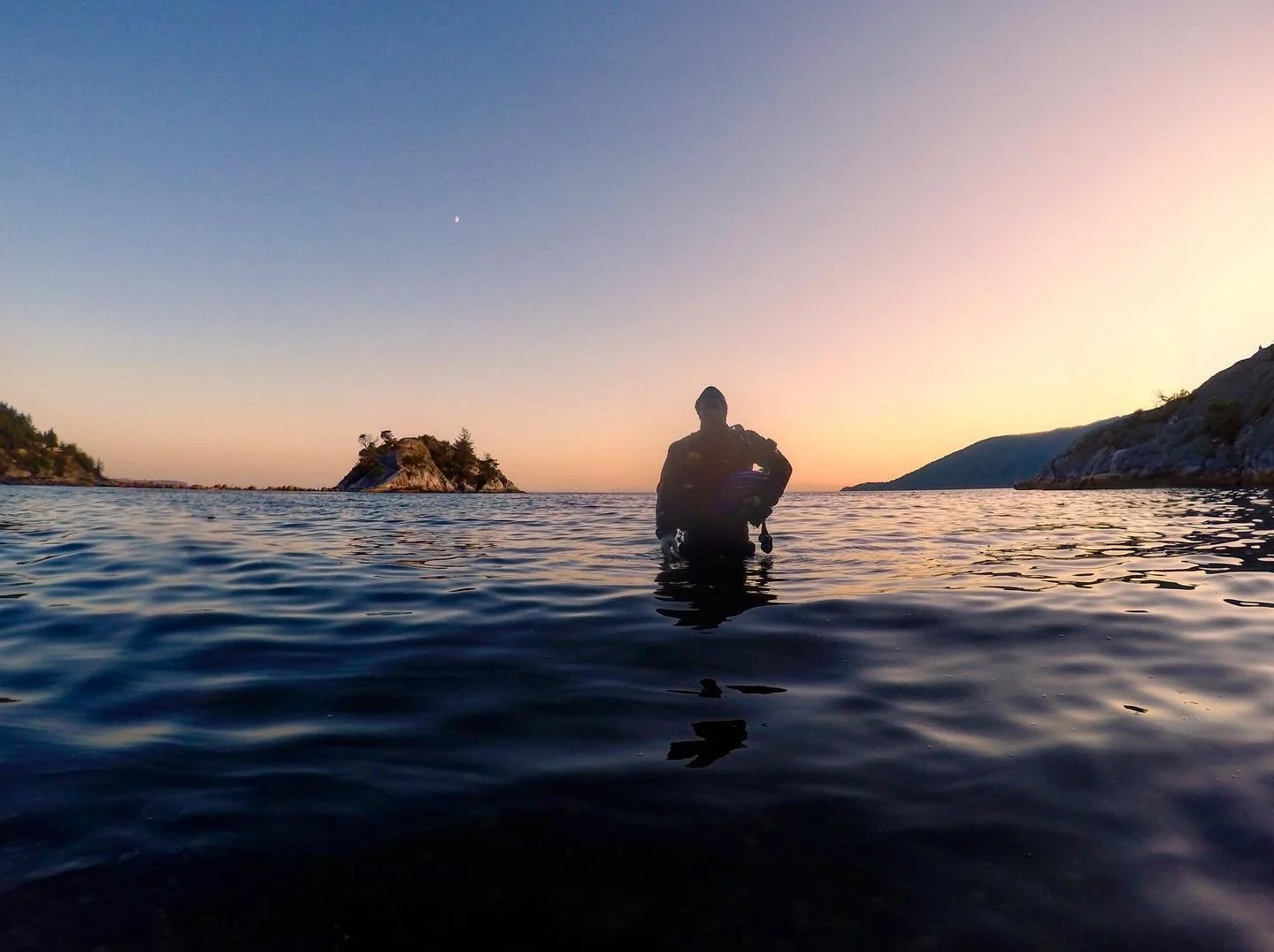
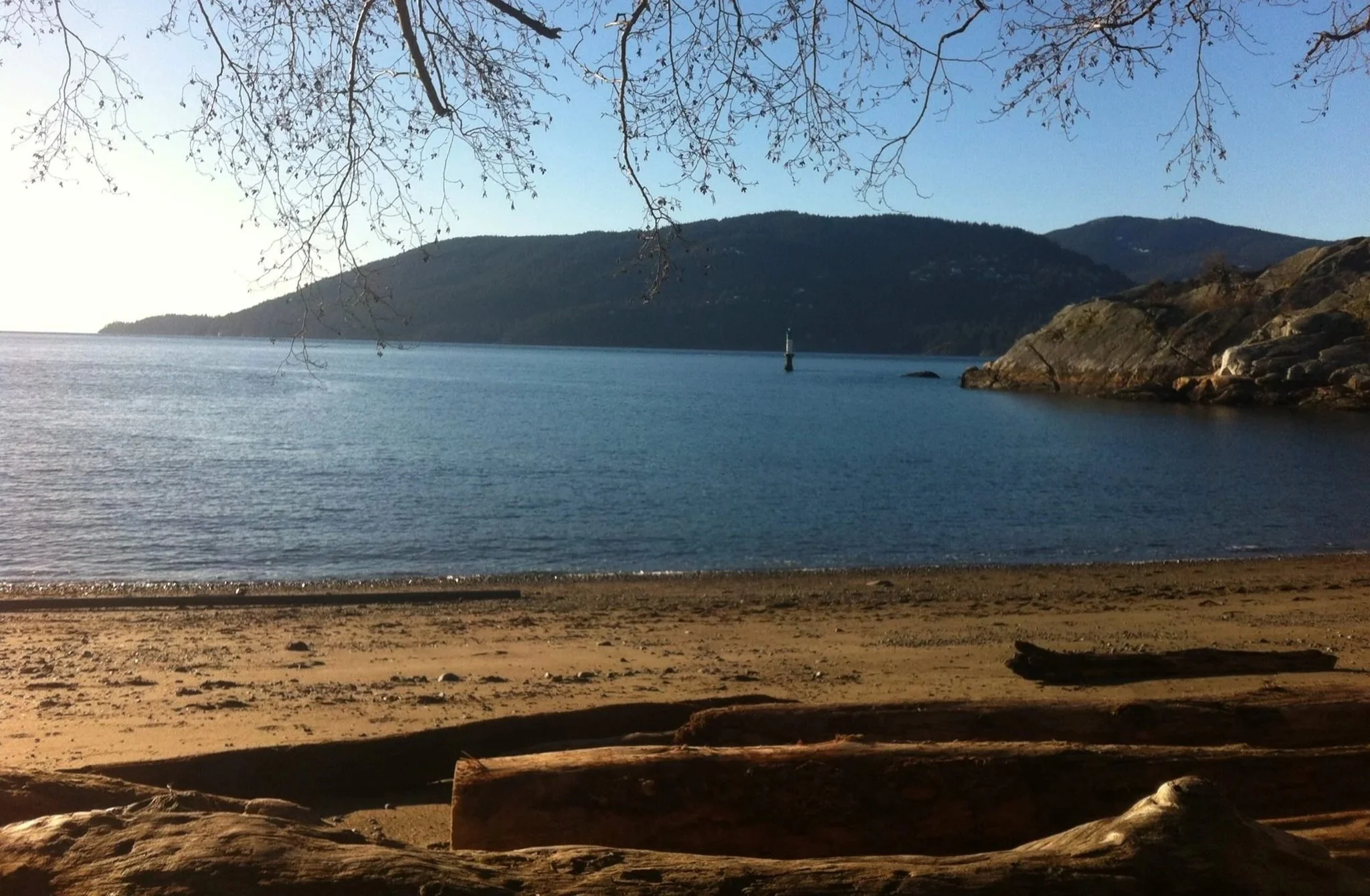
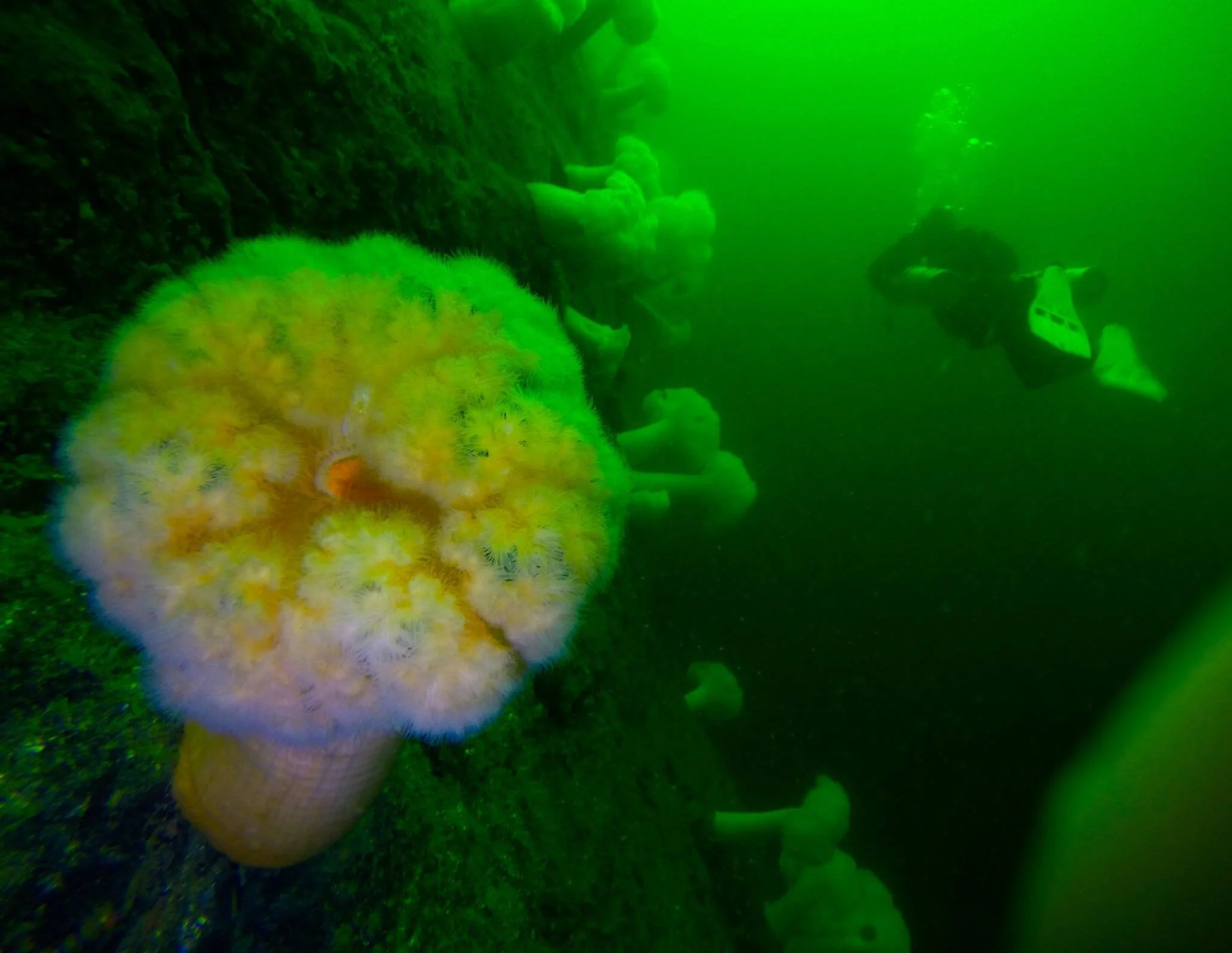
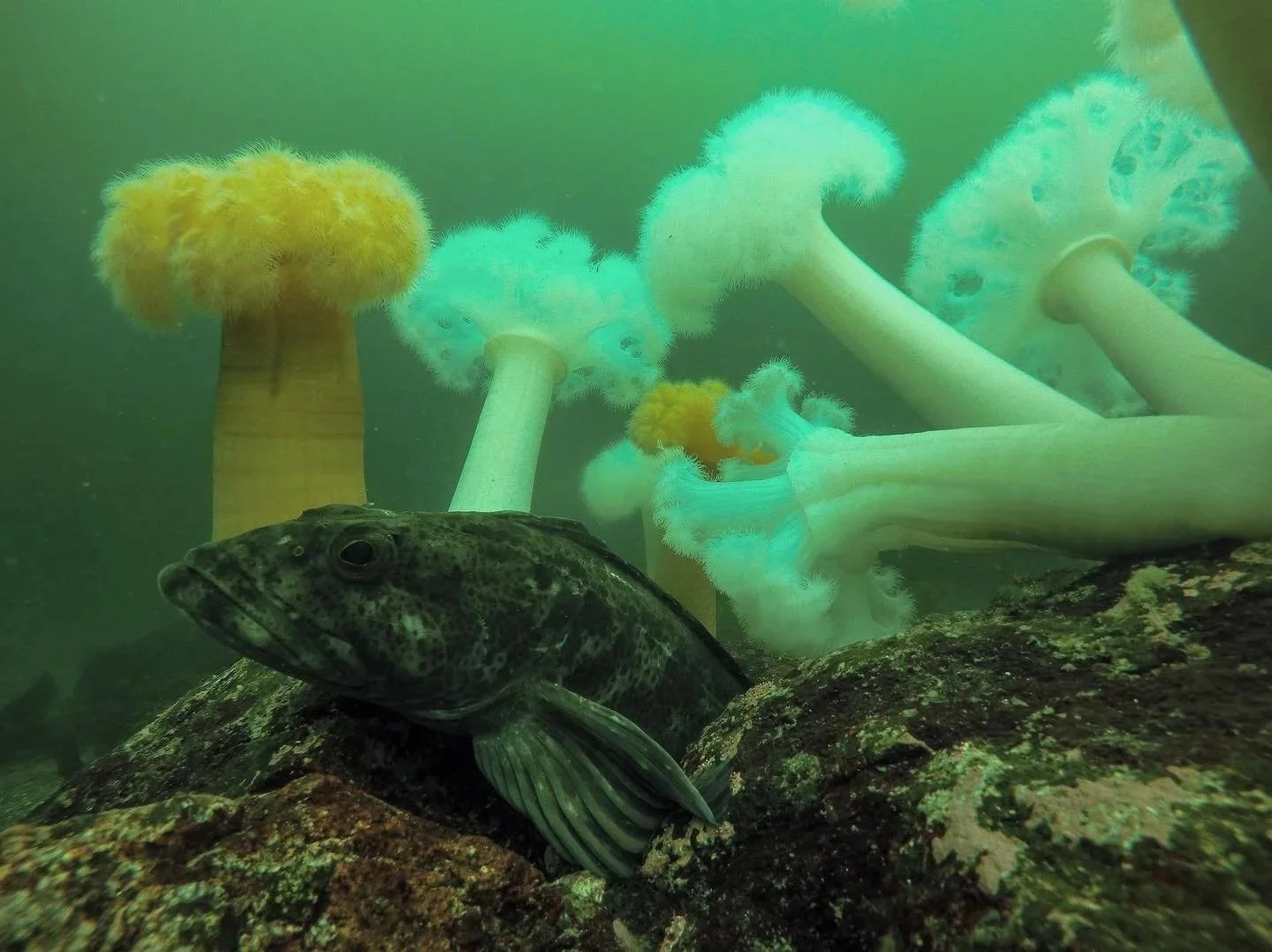
Two main dive areas - 1) the main bay - you can dive the rock wall on either left or right of the bay, but the right is most dived. Keep the wall on your right and enjoy the plentiful ochre seastars. You’ll be heading out of the bay (i.e. towards the marker post seen in the photo) and in to the more open area - currents can sometimes be present at this point. Out here you’ll find a big giant plumose anemone garden and plenty of lingcod, other fish, and invertebrates. The sloping wall drops off really deep here, and deeper/tec divers can find cloud sponges. 2) the cut - this is a narrow beach/slope entry through the rocks far around to the right (west), outside of the bay. The entry to the cut is found from the parking lot near the washrooms, down some steps. It can be dived as a one way dive from the cut around to the main bay - if the current allows
You’ll see plenty of seals from the surface, but they remain pretty elusive underwater. Orcas were also sighted here once in a rare occurrence!
When a BC Ferries ship is leaving horseshoe bay, it can be pretty loud underwater. Once outside of the bay, also be aware of recreational boats overhead
Shore Diving
Porteau Cove
Roughly 40km north of West Vancouver on the Sea to Sky Highway. Porteau Cove is a BC Provincial Park with a beach and campground. There are toilet facilities, an outdoor shower for divers, and a large-ish parking lot - but get there early in the summer as the parking lot fills up quick with tourists
3 main dive areas - under the pier (lots of crabs & anemones etc.), out in the bay where the tire reefs are, and then out to the far right of the beach (north) where there is a small wreck - best to surface swim to the big marker buoy and descend there to save air. Dive site maps are posted by the boat ramp
A line of buoys mark out the swimming/diving area. Be sure to stay within this buoyed off area as there can be a lot of boat traffic outside the buoys, especially in summer
Expect to see lots of invert life under the pier and around the tire reef. The small wreck is home to lots of fish life. I highly recommend the wreck dive!
The small wreck at Porteau Cove
Kelvin Grove
Just south of Lion’s Bay. Follow directions to Tidewater Way
Drop your gear in the turning circle below the train tracks by the path to the beach, then park in the small parking lot above the train tracks. Access to the beach is via a ~100m sloped trail
Wall diving - if you swim NW across the cove to the wall, you can drop down into a nice wall dive with a bottom depth of roughly 30m. Alternatively, in front of the rock entry is a ~12m depth of rocky outcroppings which can provide a shallower dive site
You can see giant plumose anemones, lots of small fish, lots of invertebrate life.
Annapolis Wreck
Halkett Bay, Gambier Island - a 20 minute boat ride from Horseshoe Bay (HSB). Sea Dragon Charters dive shop in HSB offers charter trips here
HMCS Annapolis was a 112m long Canadian Forces destroyer class warship, sunk as an artificial reef in 2015
She sits in 32m depth, with deck structures at 12-22m and the very top of the ship rising to 10m. Three large surface buoys on the stern, midship, and bow offer options for descent/ascent. At least 2 dives are needed to properly explore the wreck
The marine life is still growing on the ship, but the ship alone is an impressive dive with lots to explore on the outside and, should you have the appropriate certifications, on the inside as well
Boat Diving
Pinnacle/Wedding Cake
A short boat journey from HSB
A pinnacle that starts at ~5m depth and expands out in layers as the depth increases (down to over 30m), making it an excellent dive site no matter what depth you are wanting to explore at
Different crab species (inc. Puget Sound king crabs and Dungeness crabs), octopus, wolf eels, ling cod, rockfish, kelp greenlings, and occasionally seals can be encountered here
Pam Rocks
A line of rocks located South of Anvil Island
Home to a large seal colony that love to sunbath and sleep on the rocks. Bald Eagles can often be seen too
Underwater, you can likely catch glimpses of seals passing by, curious but shy. Occasionally, a more confident seal may come and play with divers
Plentiful invertebrate and fish life can also be enjoyed, as well as cloud sponges at 25-30m
Sea Dragon also offer guided seal snorkel trips to Pam Rocks, for the non-divers
Christie Islet
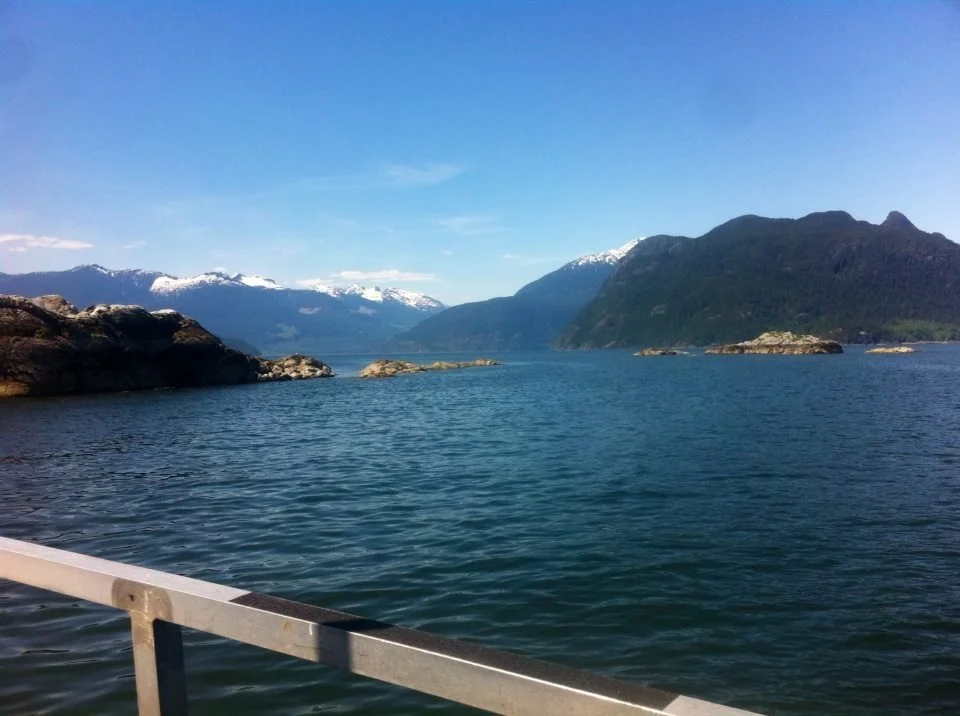
Directly north of Pam Rocks, closer to Anvil Island
Christie Islet is a bird sanctuary, so strictly no setting foot on the island
Dive boats tie up to a mooring buoy which divers can descend down and explore the site
Most of the site is a depth of 15-20m, but a wall can be found the drops off to over 30m.
-
Having lived in Squamish for 6 years (2016-2022), I became very familiar with my local Howe Sound dive sites. Some of my favourite dives include the small wreck at Porteau Cove, the Cut round to the Bay one-way dive at Whytecliff, and of course the Annapolis Wreck.
I had a buddy who at various times had a small skiff and a sailing boat, so we did some exploration/adventure diving around Howe Sound - anchoring up in various bays on random islands and backward rolling in to see what we could discover, including at Hermitt Island and Anvil Island. It was fun to explore, but we never found a site better than the well-established dive sites - so they’re well-known for a reason!
I also worked for a while at Sea Dragon Charters in West Vancouver, both in the shop and as the seal snorkel guide at Pam Rocks. I truly loved working at Sea Dragon, and the owners are two of the loveliest people. They have excellent retail and rental gear, including Santi drysuits. So, Sea Dragon will always be my recommendation for a dive shop and dive charter in the Vancouver region.