


-
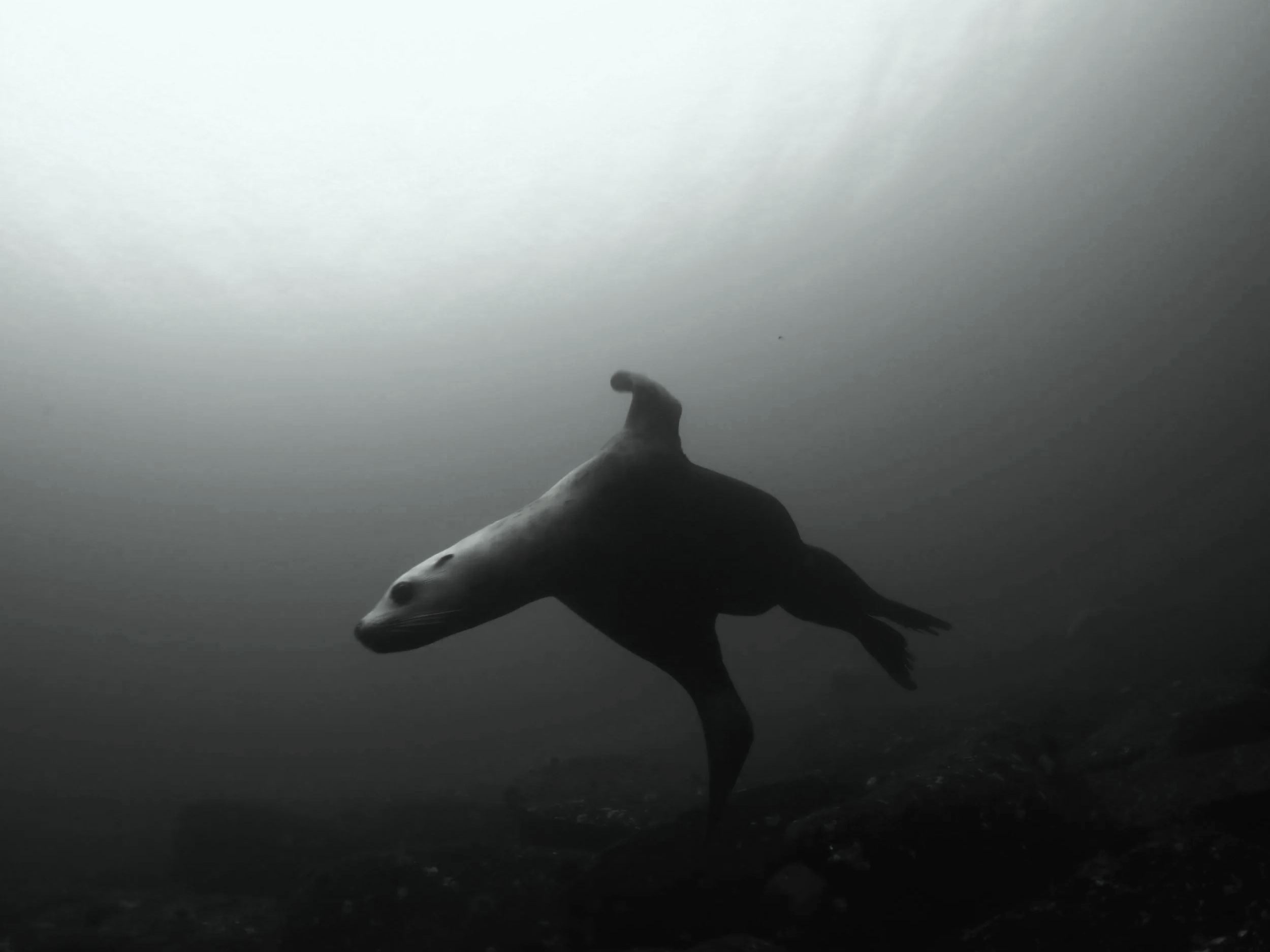
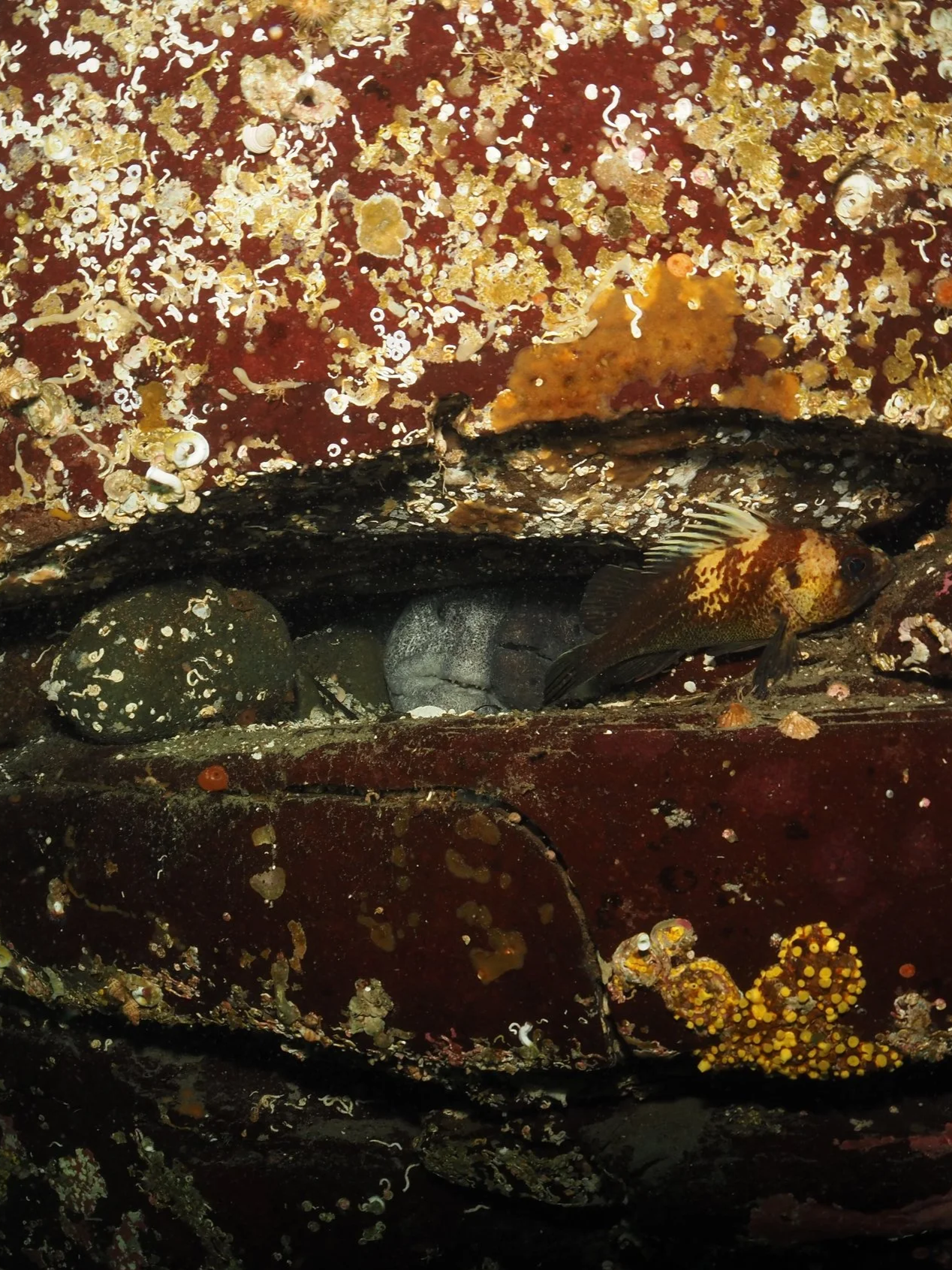
Giant Pacific Octopus, sealions, wolf eels, giant invertebrates, rockfish, ratfish (chimeras), kelp forests. The best cold water diving in the world!
-
November - March for best visibility (winter diving!)
Early Spring (~March) for the herring spawn (this means sealions!)
Fall for salmon run snorkelling
-
Nanoose Bay, Comox, Victoria (Ogden Point), Port Hardy (Browning Pass)
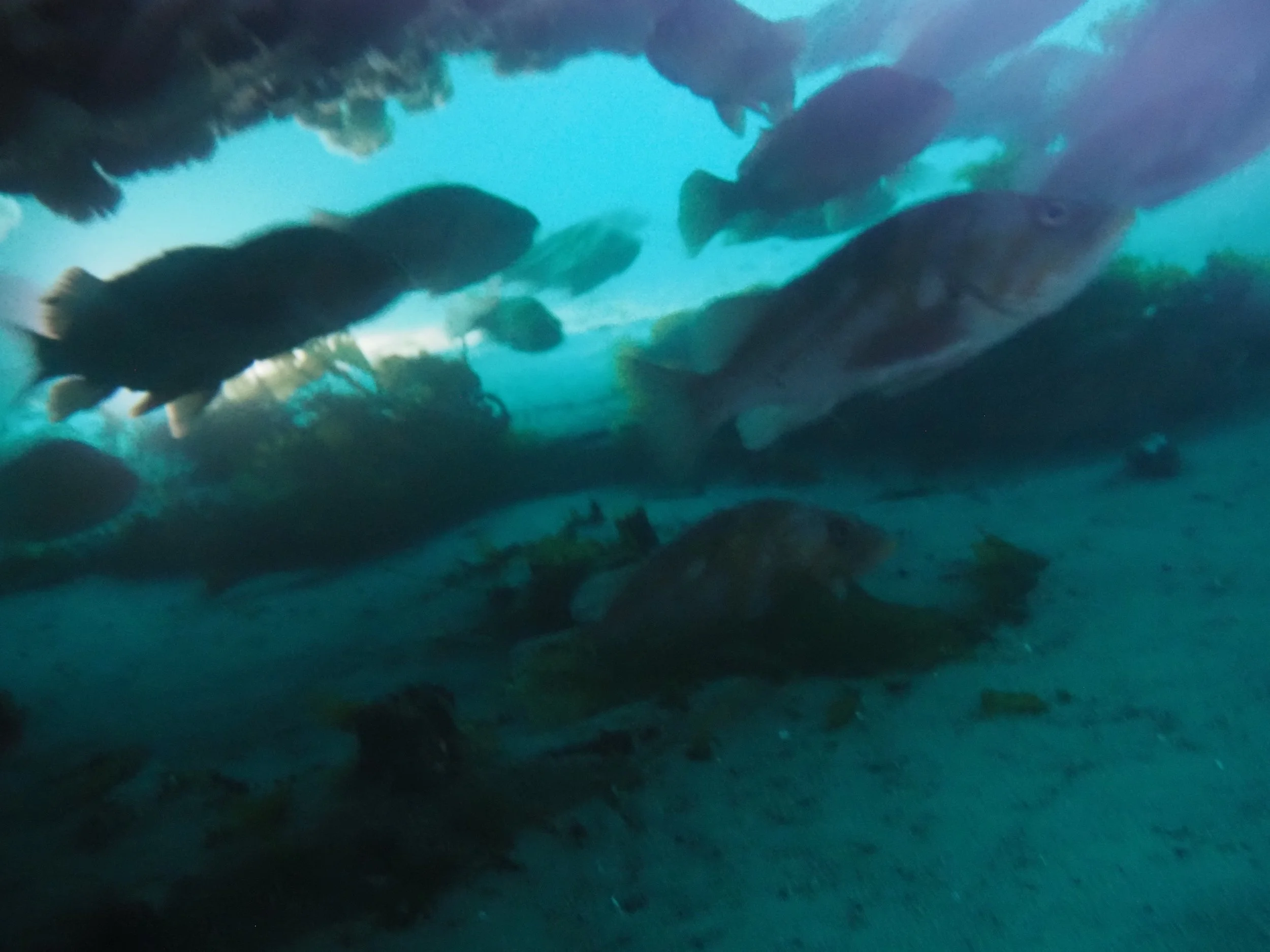
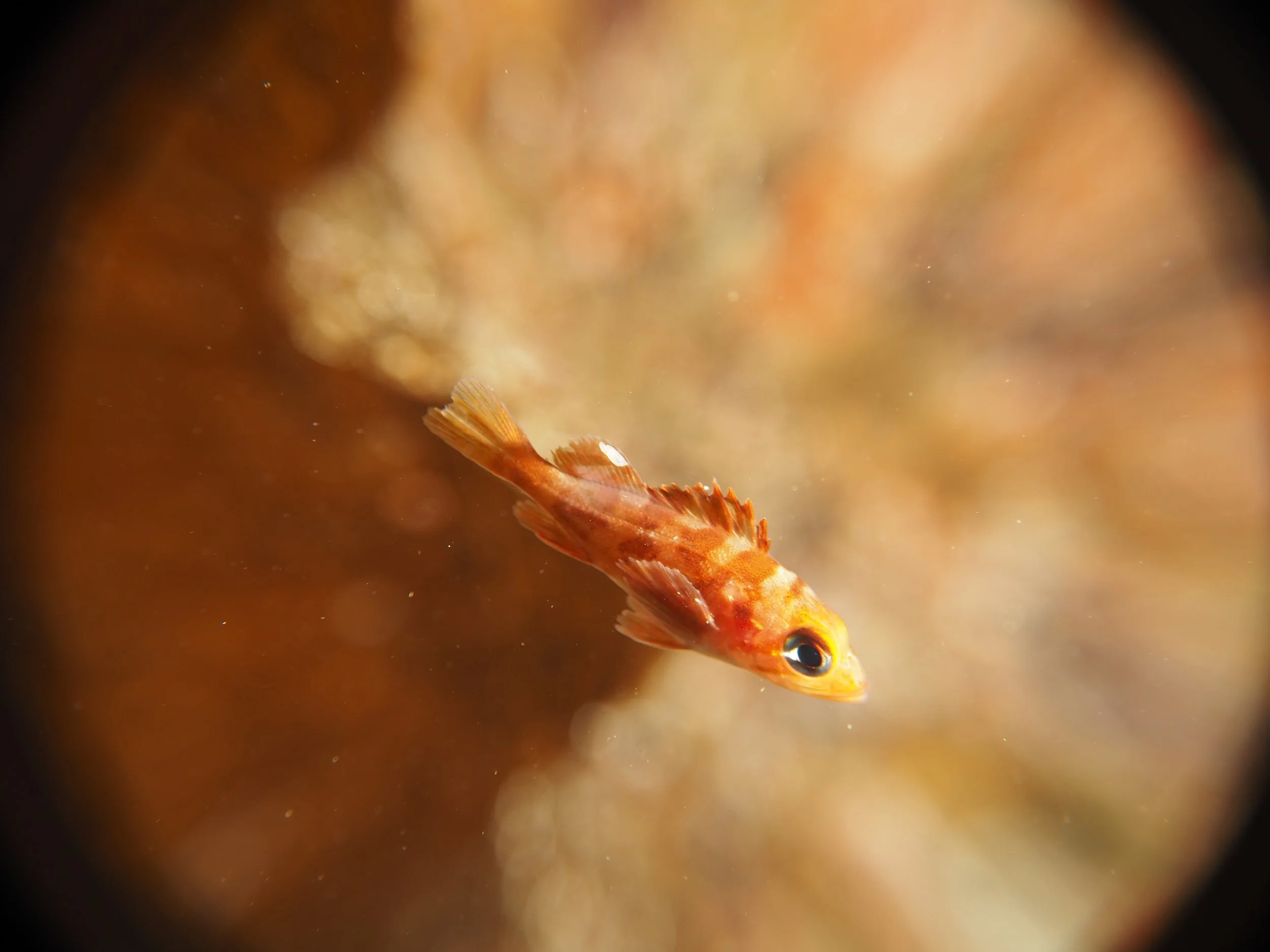
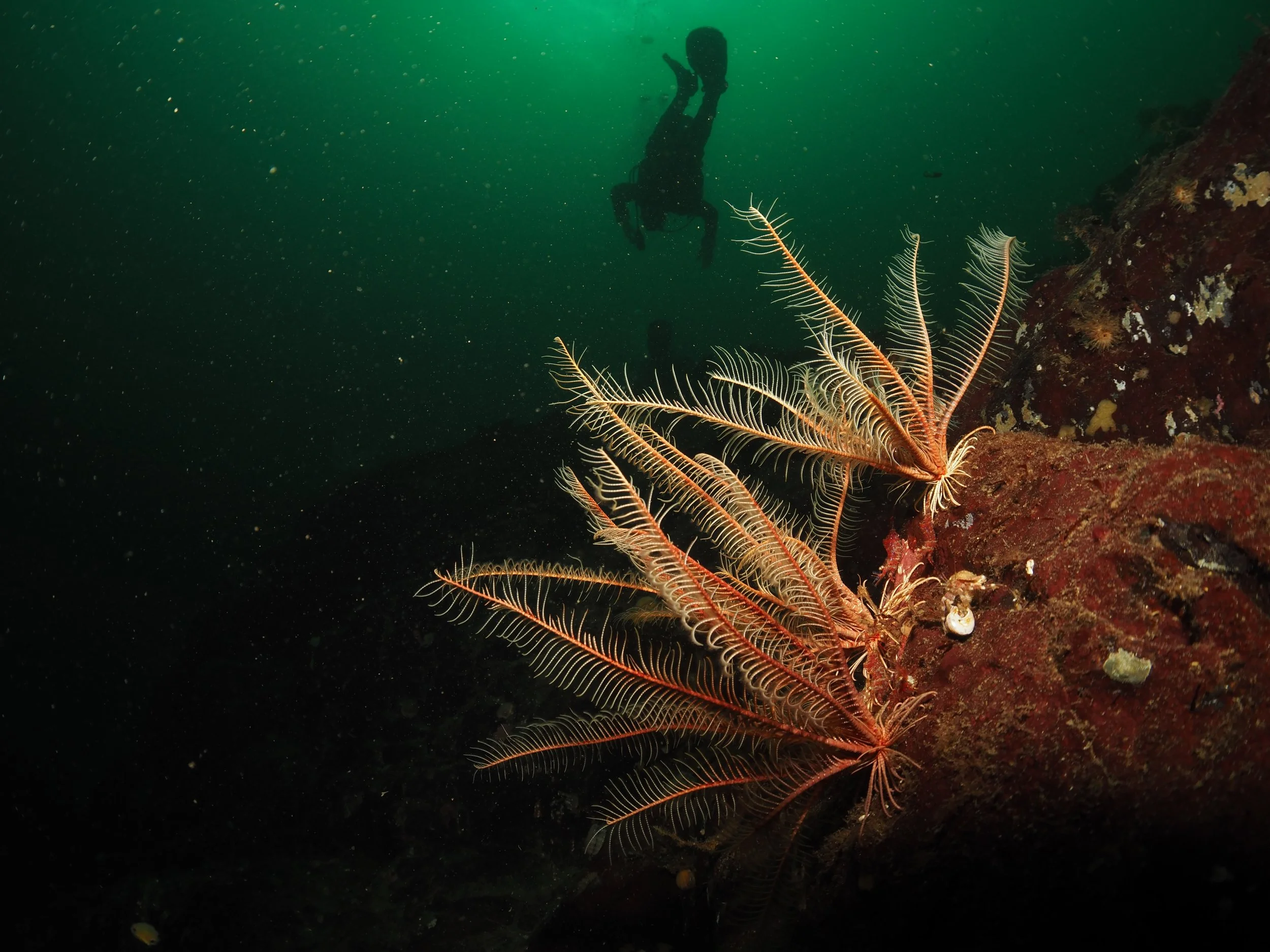
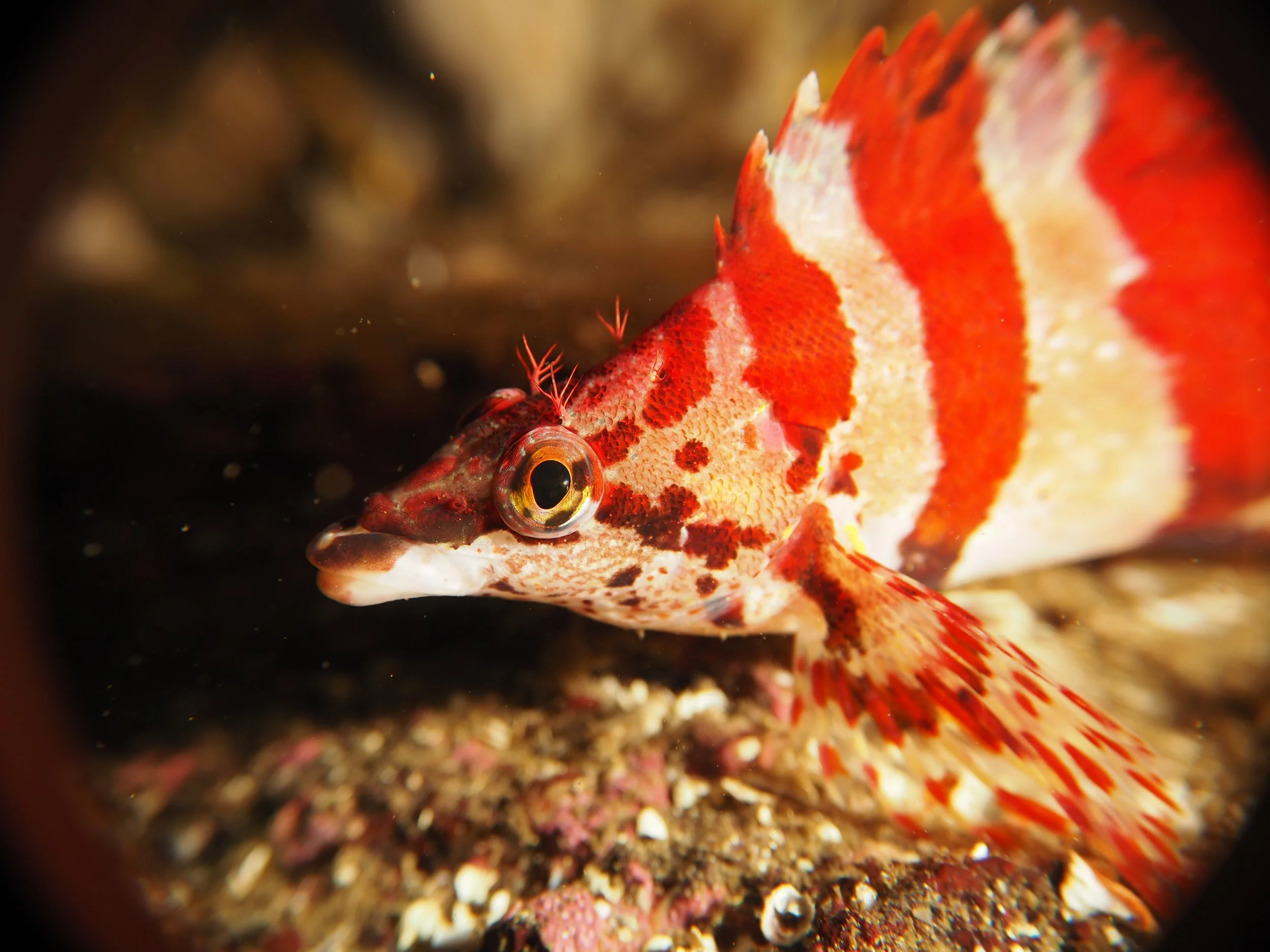
The vibes
Vancouver Island is located in the Pacific Northwest, so it boasts breathtaking mountain terrain, rugged coastlines, vibrant rainforests, long sandy beaches, amazing sunsets, and smaller islands scattered all around the coast. For nature lovers, it’s a true paradise!
In the summer, you can spot black bears and humpback whales, bald eagles and salmon runs in the fall, sealions during the spring herring run and, if you’re lucky, the northern or endangered southern resident orcas year-round.
Towns are scattered around mostly the southern and eastern shorelines of Vancouver Island. A real small-town community culture exists, with a rotating schedule of community events and farmers markets. Plentiful breweries, cideries, and wineries can be found all over the Island & are a great place to gather after a fun day of diving.

Good to know
Outdoor sports and activities are a big part of the culture and communities of Vancouver Island. Aside from diving, activities include mountain biking, rock climbing, running, ski/snowboarding, whitewater kayaking, ocean kayaking, sailing, and surfing. So, if you love outdoor activities, then plan for an extended stay on the island to explore all that is on offer.
The Canadian Dollar is weaker than the US Dollar. For this reason, it can be a more affordable destination for Americans and Europeans. Don’t forget, tax is not included in displayed prices!
1 day boat charter (2 dives) = ~200 CAD
Shore diving = Free! (tank rental 15 CAD)
Top tips
The diving around Vancouver Island can be dark once you get to depth, so bring your underwater light with you - great for looking in all the crevices for fish/octopus too!
If you aren’t drysuit certified, use your trip to Vancouver Island as an excuse to finally take the plunge in to drysuit diving - not only will you be warmer but it’ll be a great way to integrate in to the local dive community during your stay.
If planning to get a BC Ferry over to the Island, be sure to book ahead as soon as you know your travel dates - ferry times sell out fast, especially in the summer and on weekends. And if you book early enough, you can often snag a cheaper “Saver” ticket (as the crossing can be quite pricey).
Vancouver Island Diving
Overview:
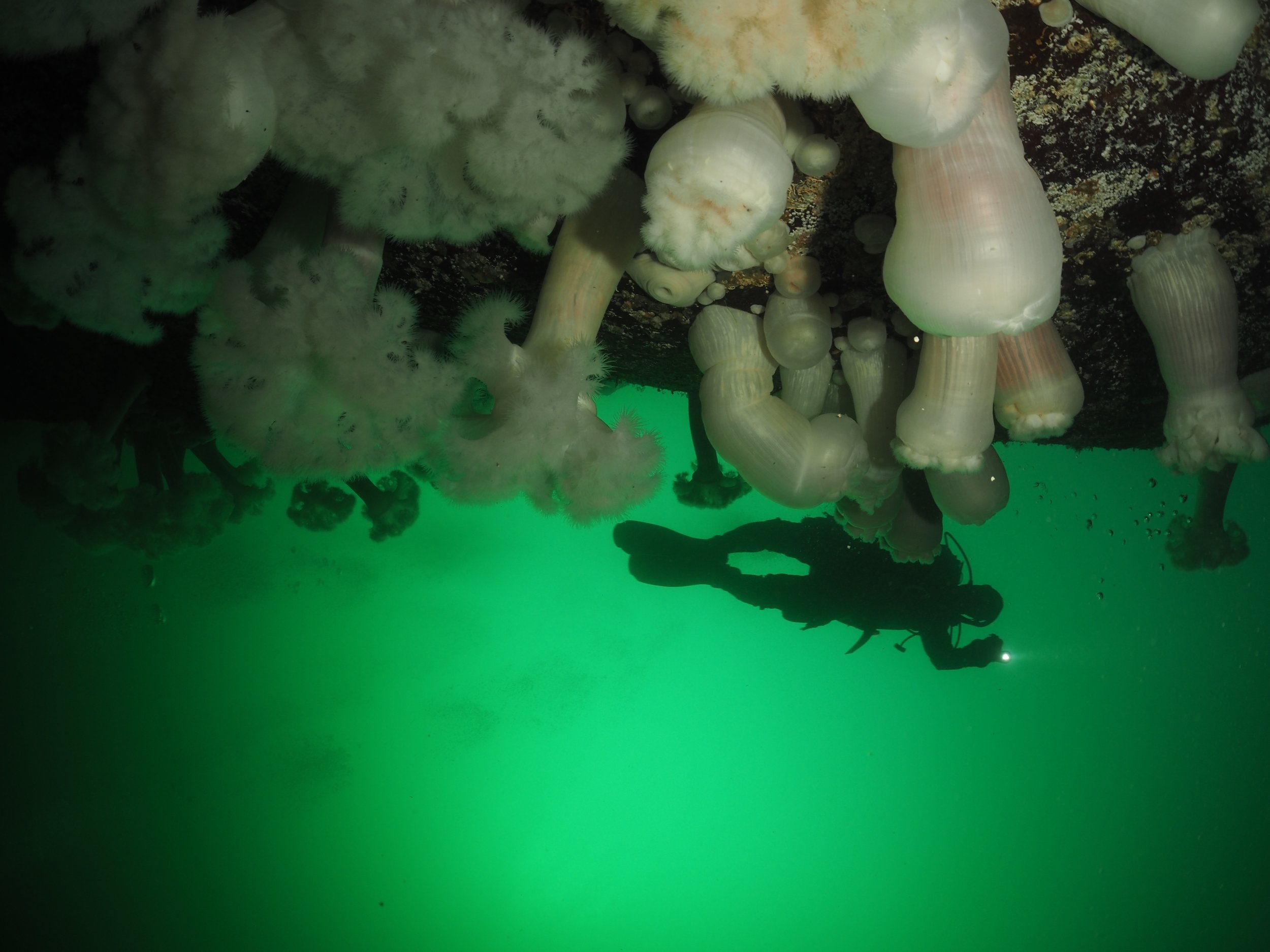
Vancouver Island offers a diversity of dive sites, from sheltered coves full of macro and fish life, to wild drift dives, exhilarating sealion encounters, and kelp forest adventure dives.
How to get there:
Airports are located in Victoria, Nanaimo, Comox, and Campbell River, offering domestic flights from the mainland B.C. as well as Alberta. Car ferries travel to the Island from Vancouver (to Victoria or Nanaimo), or from Port Angeles in Washington state (to Victoria). A passenger ferry also travels to Victoria from Seattle.
Exposure suit:
A drysuit is recommended year-round for comfort and, a non-negotiable in my opinion for winter diving. Temperatures can be as low as 4-6°C in January, and up to 10-12°C in August. Divers unfamiliar with drysuits must take a drysuit course first with a qualified instructor, as improper use of a drysuit can pose a safety risk. Drysuit courses can be taken with one of the Vancouver Island dive shops, which involves an hour or so pool session and open water dives. Most dive shops on the Island also offer drysuit rentals to certified drysuit divers.
Visibility:
The best visibility around the Island is in the winter, when the cold water temperatures prevent algae blooms. Many local divers still dive in the summer; better visibility can sometimes be found at depth, in the cooler water. Visibility begins to drop off from roughly April time, once the herring spawn begins. Some local dive shops like Pacific Pro Dive in Courtenay offer visibility reports from local sites, so give them a call for some advice on where the best visibility can be found.
When to visit:
For the more serious, or experienced drysuit divers and photographers, a winter trip to Vancouver Island will reward you with excellent visibility. Although be warned that you could emerge from a dive to snow on the ground (this happened to me once in Nanoose Bay!). Spring time (~March) is also a nice option, when the air temperature is a little warmer, the visibility is still good, and if you are looking for some megafauna action, the Stella Sealions have gathered in anticipation of the herring spawn.
Guided dives:
There are many shore entry dive sites around Vancouver Island where you could dive by yourself. Pacific Pro Dive provides free maps of a handful of the local mid-island sites from Campbell River to Nanoose Bay, so pay them a visit if you are passing by. If you are unfamiliar with the local dive sites, it is always worth hiring an experienced local DM. Tides, current, and wind can be big here and pose potential hazards at dive sites. A local DM will be able to take you to an appropriate dive site for the day’s conditions, and know where all the cool critters are hiding out, such as resident wolf eels or giant pacific octopus! Some dive shops like Pacific Pro Dive in Courtenay also offer free guided “club dives” on some weekends, which is a great way to explore a new dive site and meet some local divers!
Dive Providers
Dive shops in Victoria, Nanaimo, Courtenay, and Port McNeill will allow you to discover the many dive sites spread throughout the Island. These are the ones that I have personally experienced and trust:
-
Pacific Pro Dive is the best dive shop in Courtenay. They provide courses, gear rentals and sales, boat charters, guided shore dives, and free club shore dives on the weekend! The staff are very knowledgeable and friendly.
-
Nanaimo based, they offer guided dives, gear rentals and sales, courses, and charters.
-
Located in Port McNeill in the north of Vancouver Island, they offer boat charters or guided shore dives.
Where To Stay
The Island is actually quite large, so you’ll want to stay near to your chosen dive destination. To see the best of Vancouver Island diving, you should plan to stop off in south island, mid island and north island.
-
For a bit of comfort & luxury, stay in the Fairmont Empress or Grand Pacific Hotel in the heart of historic Victoria, a stone’s throw from the Ogden Point dive site. For a more standard hotel, the Days Inn by Wyndham is good choice in the same great location. Reasonably priced Air BnBs can be found outside downtown Victoria if you want a bit more of a homey style and don’t mind a short drive.
-
Mid Island diving means Nanoose Bay, Comox, the pier in Campbell River, and Norris Rocks off Hornby Island. For Comox, Hornby Is. and arguably even Campbell River diving, you’ll want to stay in the Comox Valley (Comox, Courtenay and Cumberland). The Old House Hotel in downtown Courtenay is the nicest place to stay. Alternatively, a new Holiday Inn Express recently opened in east Courtenay.
For diving in Nanoose Bay, there are a handful of higher end beach front resorts in Craig Bay, like the Tigh-Na-Mara. The Bayside Resort in Parksville is also a nice option. I would skip staying in Nanaimo, unless you want the convenience of a bigger town / a short drive to the dive shop. -
The north island is a little more rough and ready, with more limited accommodation options. If diving out of Port McNeill or Port Hardy, I would recommend the Port Hardy RV & Resort which has cute little log cabins, or the Black Bear Resort in Port McNeill, which is basic but does the job.
If you have the budget, the ultimate north island dive experience means staying at God’s Pocket Resort, a dive resort located on an island off Port Hardy.
Land-based Fun
No matter what time of year you choose to dive Vancouver Island, there is an abundance of activities to choose from to keep you occupied above the water as well.
-
Hikes can be found throughout the island. Reach the alpine in Strathcona Park, or get to know the wild coastline through the immensely beautiful multi-day hikes of the Juan De Fuca Trail, West Coast Trail, or North Coast Trail.
Camping at recreation sites is a great way to connect with nature, and stay near to some of the more remote trailheads.
-
The west coast of Vancouver Island receives swell from the expansive North Pacific Ocean. Visit the small surf town of Tofino and rent a board or take a lesson on one of the many sandy beaches nested amongst wild raincoast.
-
Since winter is one of the best times to dive in British Columbia due to the better visibility, you can team your dive trip up with a little winter sports action. Visit Mount Washington Alpine Resort near the Comox Valley for some powder and apres-ski, or even just a snowshoe adventure.
-
Visiting all the amazing local breweries, wineries, cideries and eateries all over Vancouver Island will definitely keep you busy when not under the water. Just visit any town and you’ll have a handful to choose from!
South Island
Ogden Point
Downtown Victoria
Shore entry. Multiple entry points along the ~800m long breakwater with a range of accessible depths (deeper the further out you go). A popular dive site
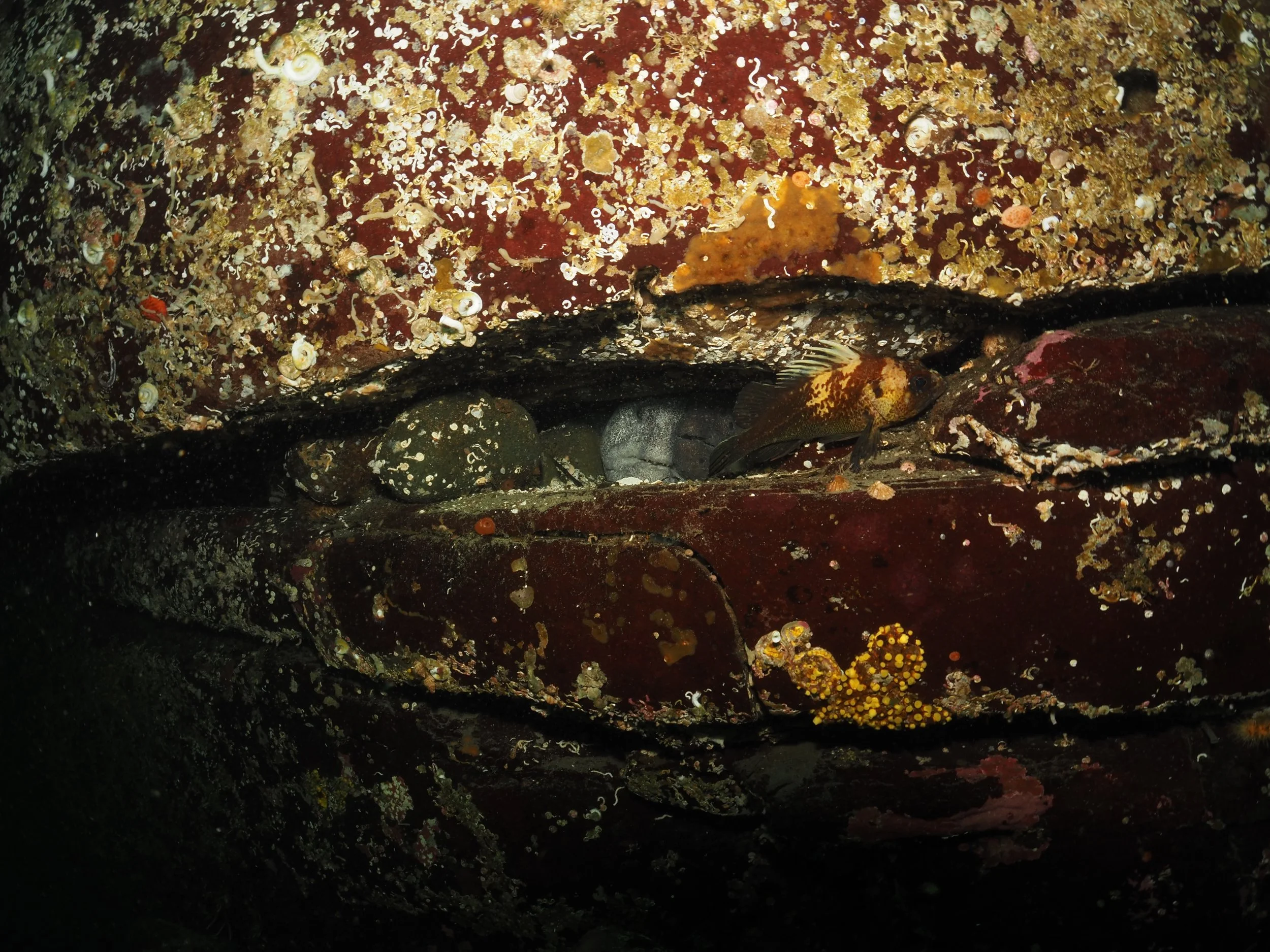
Expect to see giant pacific octopus, wolf eels, puget sound king crabs, and bull kelp (from spring - fall)
Mid-Island
Oak Leaf
Nanoose Bay
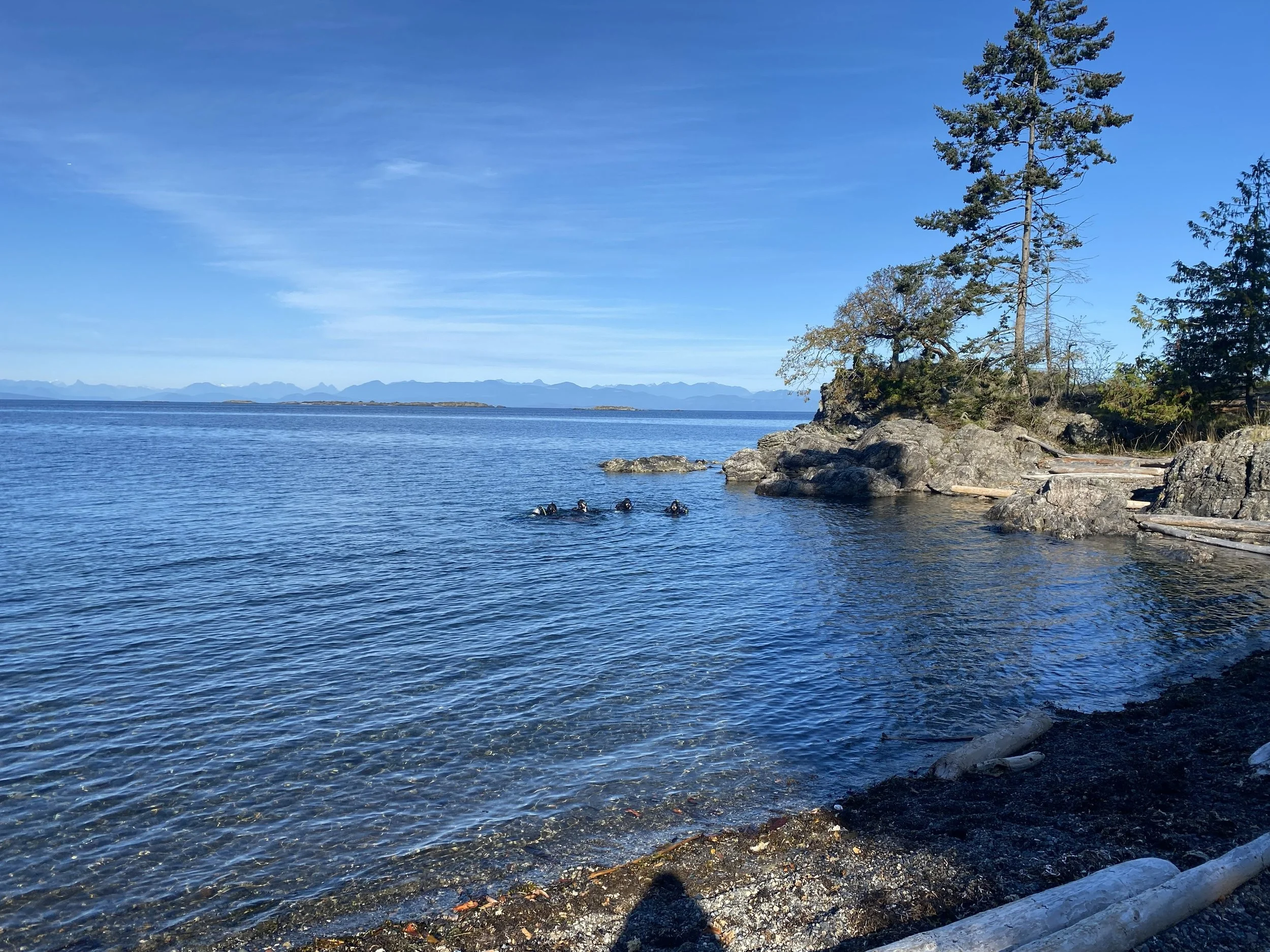
Shore entry. 3 beach options to choose from on different sides of the peninsula - usually at least one side is protected from the wind/swell. A bit of a longer walk to the beach than other sites. Parking and outhouse facilities.
Gradual sloping bays that drop off to a rocky wall around the peninsula
Plenty of Giant Pacific Octopus dens, lingcod, nudis, anemones and you might even get buzzed by a sealion.
Tyee Cove
Nanoose Bay
Shore entry - nice easy gradual slope entry in a bay. Parking, outhouse, changing room, and picnic bench facilities. A popular teaching site
Can dive the far left of the bay (sometimes a wolf eel called Gramps is seen here), or the wall on the right hand side of the bay
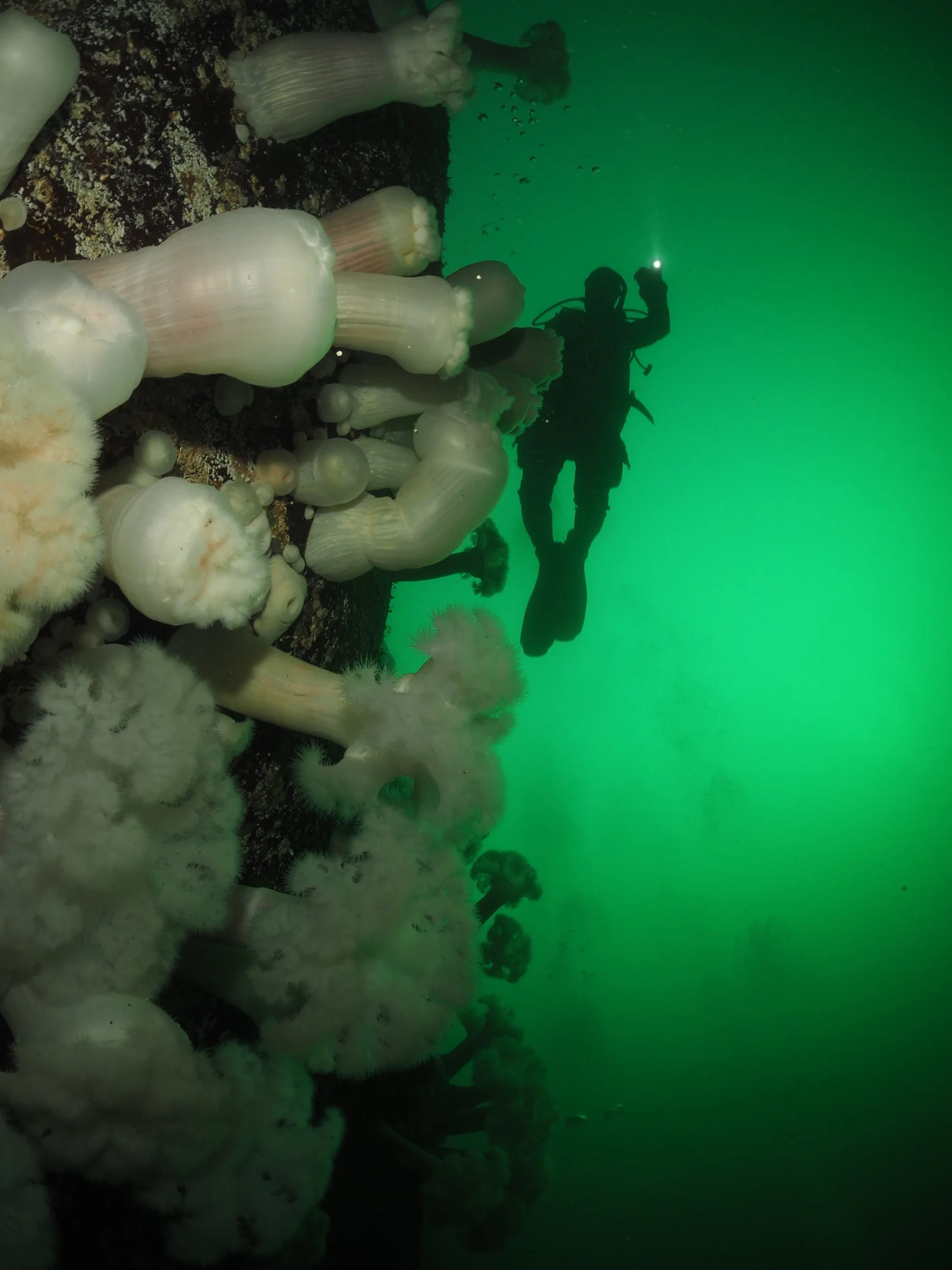
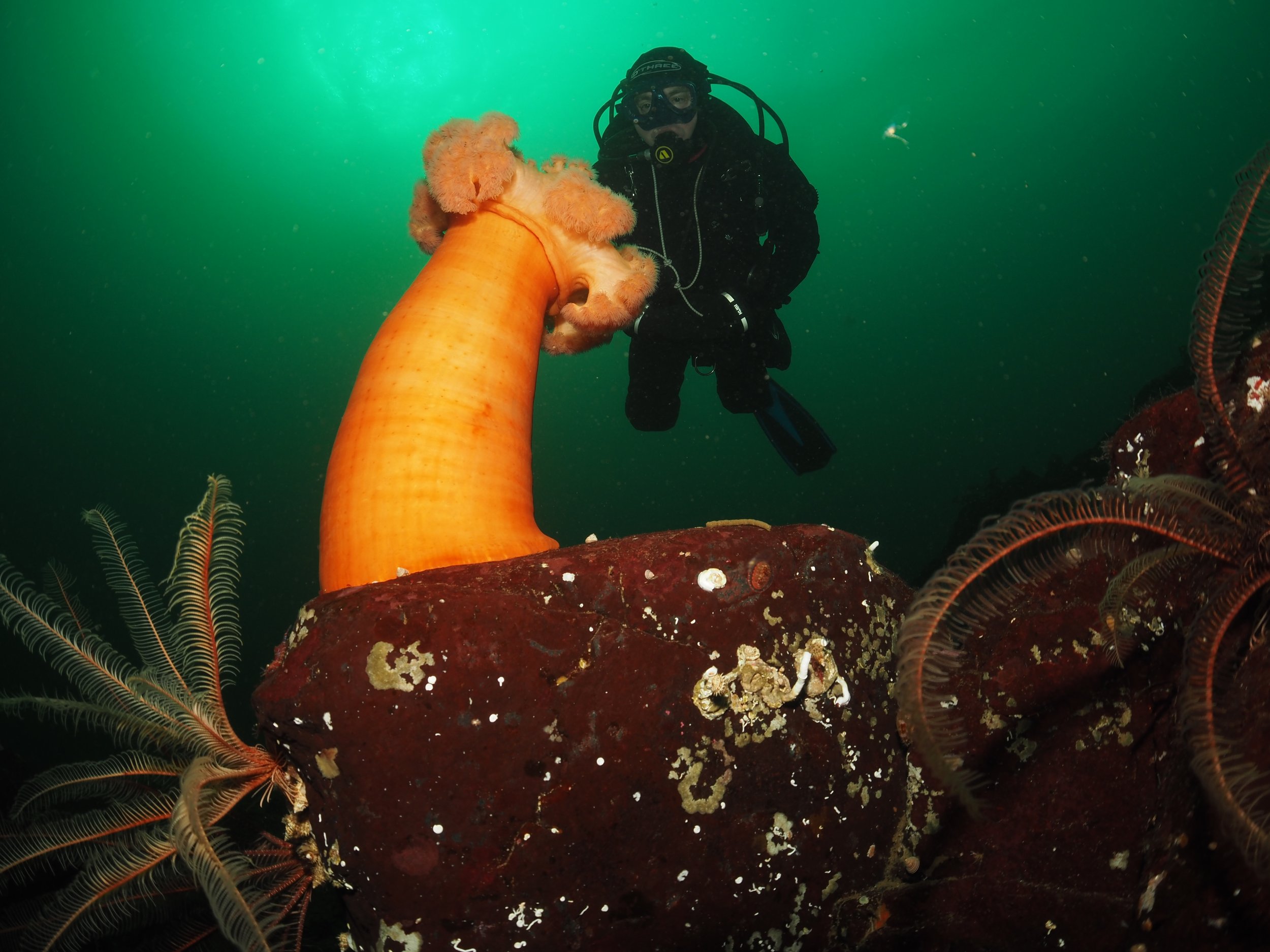
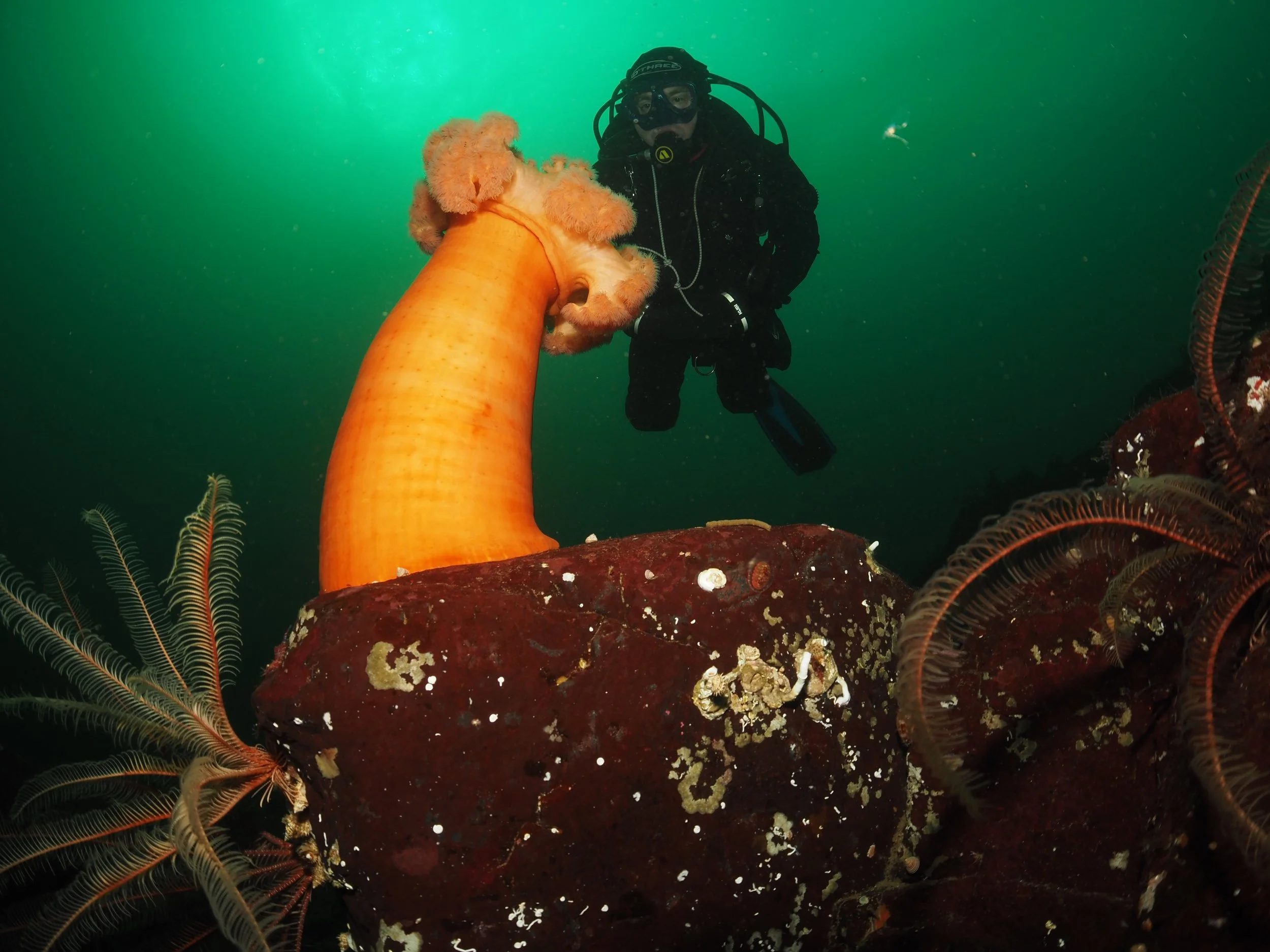
Head out over an eelgrass bed before dropping deeper to fin along a wall. Expect to see rockfish, lingcod, nudibranchs, giant plumose anemones and of course octos if you’re lucky.
Madrona Point
Nanoose Bay
Shore (rock slab) entry - 70m walk from the parking lot. Entry easiest when the tide is high and/or calm water. Can be quite exposed so plan for a calm day. Be careful not to slip on seaweed at low tide
Where the path meets the rocks, go straight to the water’s edge and use compass bearing 0 to take you to the main wall
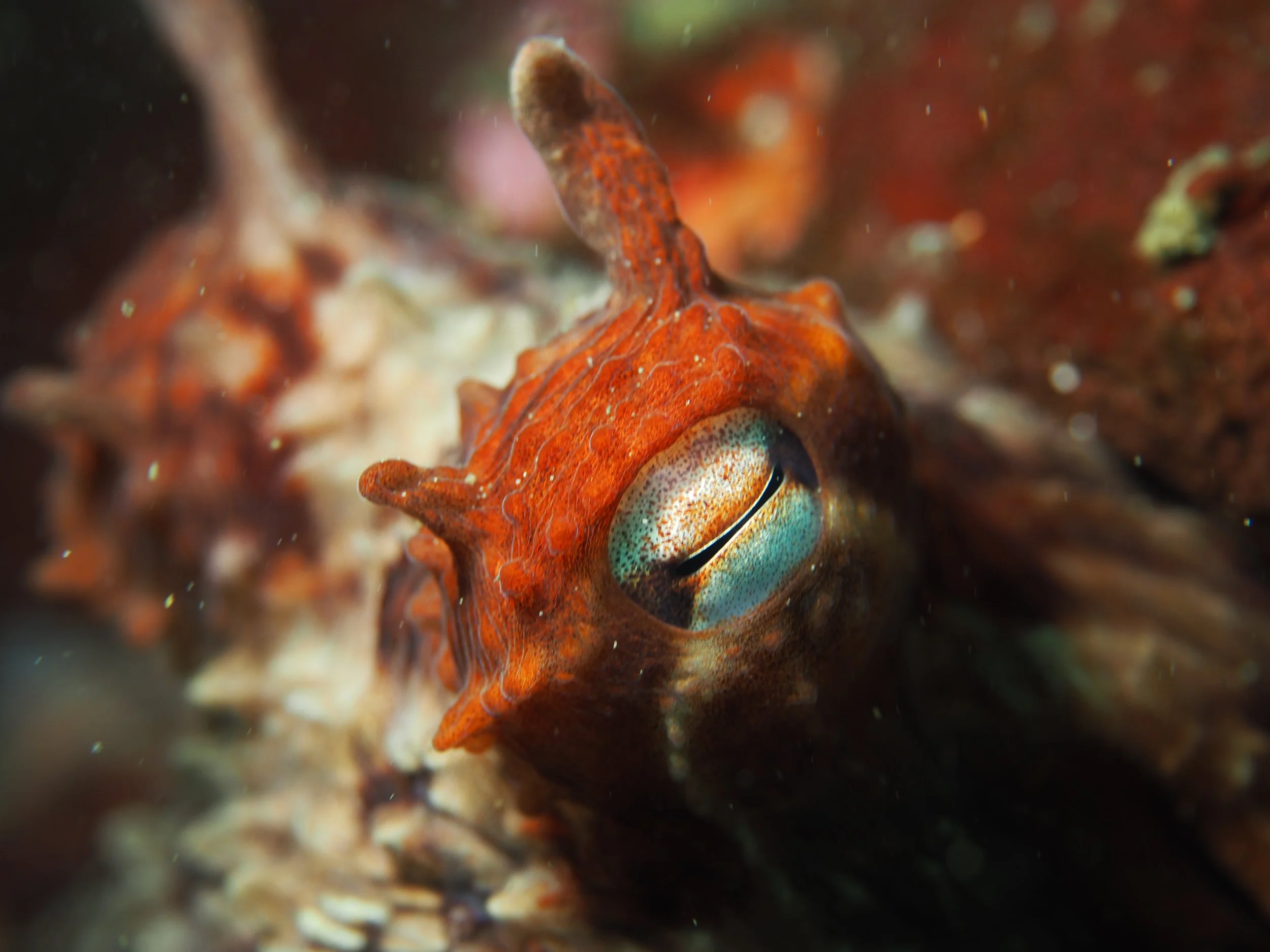
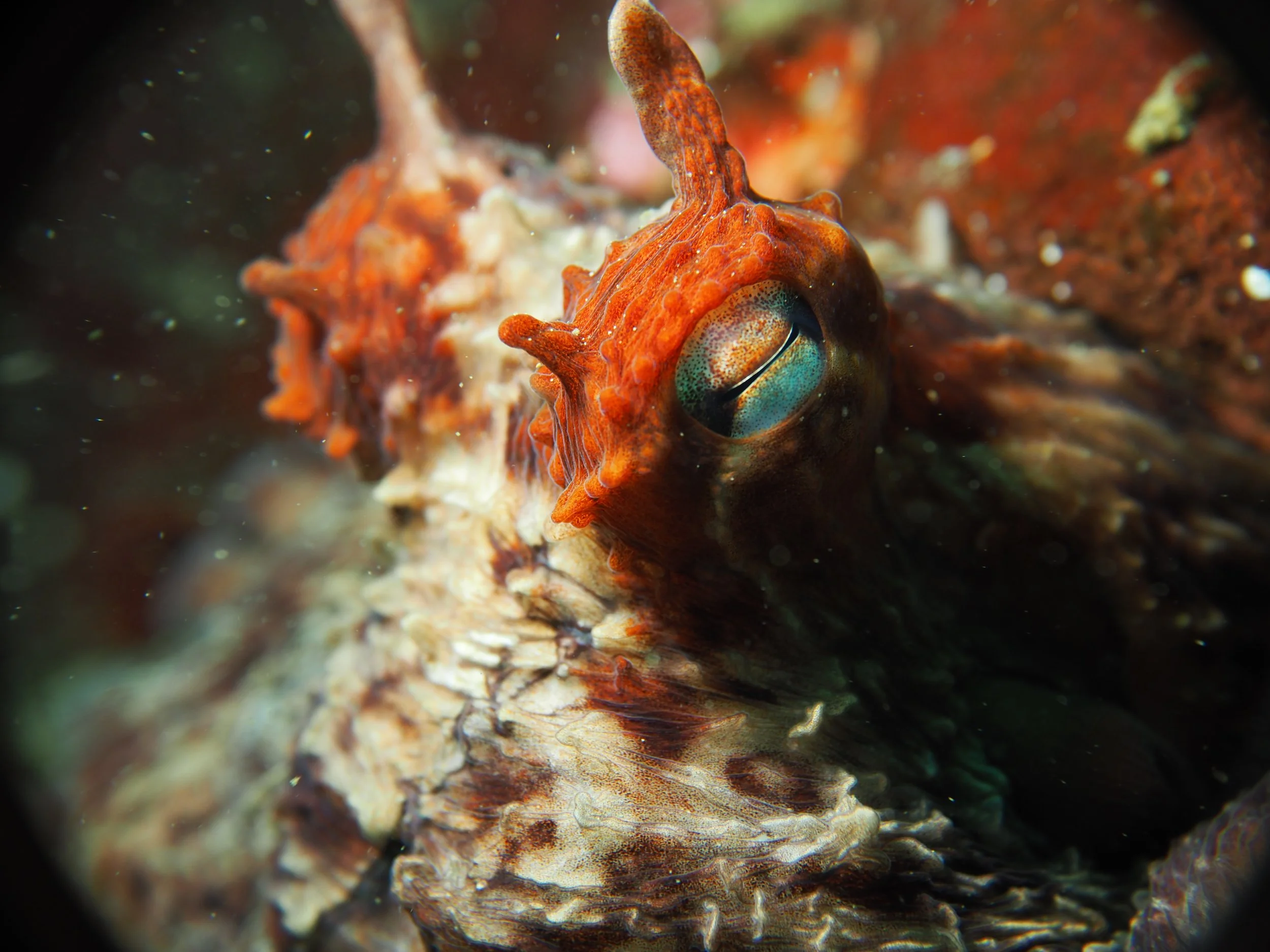
Sealions (I saw my first here!) and Giant Pacific Octopus can be seen - I had an amazing experience with a young GPO who let me get some great macro shots (as showcased here)
China Creek
Port Alberni
Shore entry at a recreation site - camping opportunity!
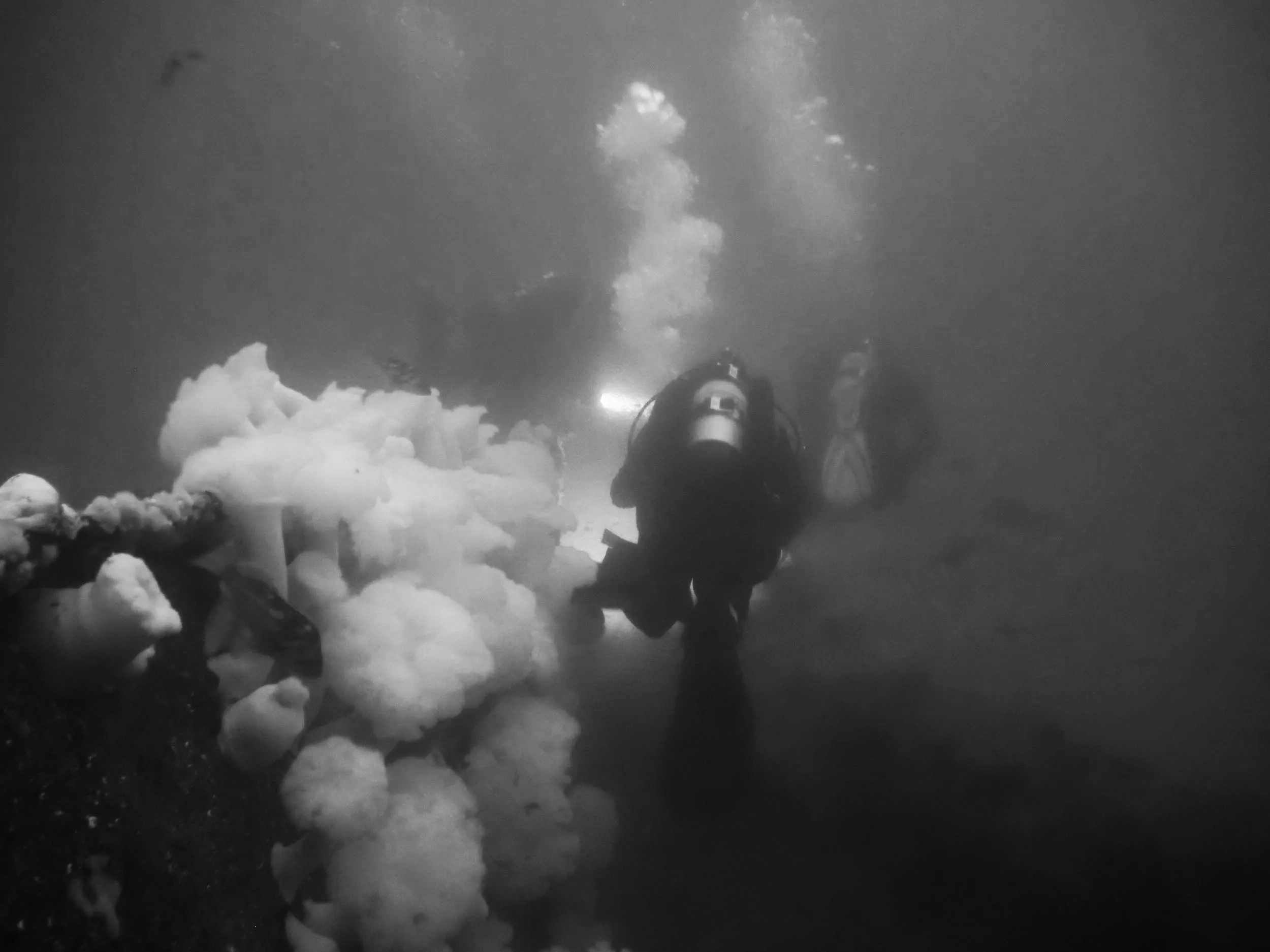
Wreck and wall diving - both accessible from the far end of the beach, with the wreck sitting in about 18m of water
You can see Giant Pacific Octopus, dungeness crabs, lots of invertebrate life, and maybe a wolf eel.
Singing Sands
Comox
Shore entry - the beach entry/exit can be steep at low tide
Wreck dive - a small wreck lies in about 24m depth a short fin off from the beach, on a north bearing. If unfamiliar with the site, you should go with an experienced guide as it could be easy to miss the wreck
Plan for slack tide, and stay aware of increasing currents. I’ve dived this with experienced local instructors, and we still got caught in a ripping current on the ascent to shore (think army crawling back along the seafloor!). Also be aware of the nearby BC Ferries terminal - a passing ferry can be loud underwater, and don’t surface away from shore
Lots of rockfish, lingcod, and huge Giant Pacific Octopus (the biggest i’ve seen!) call this wreck home
Norris Rocks
Off Hornby Island
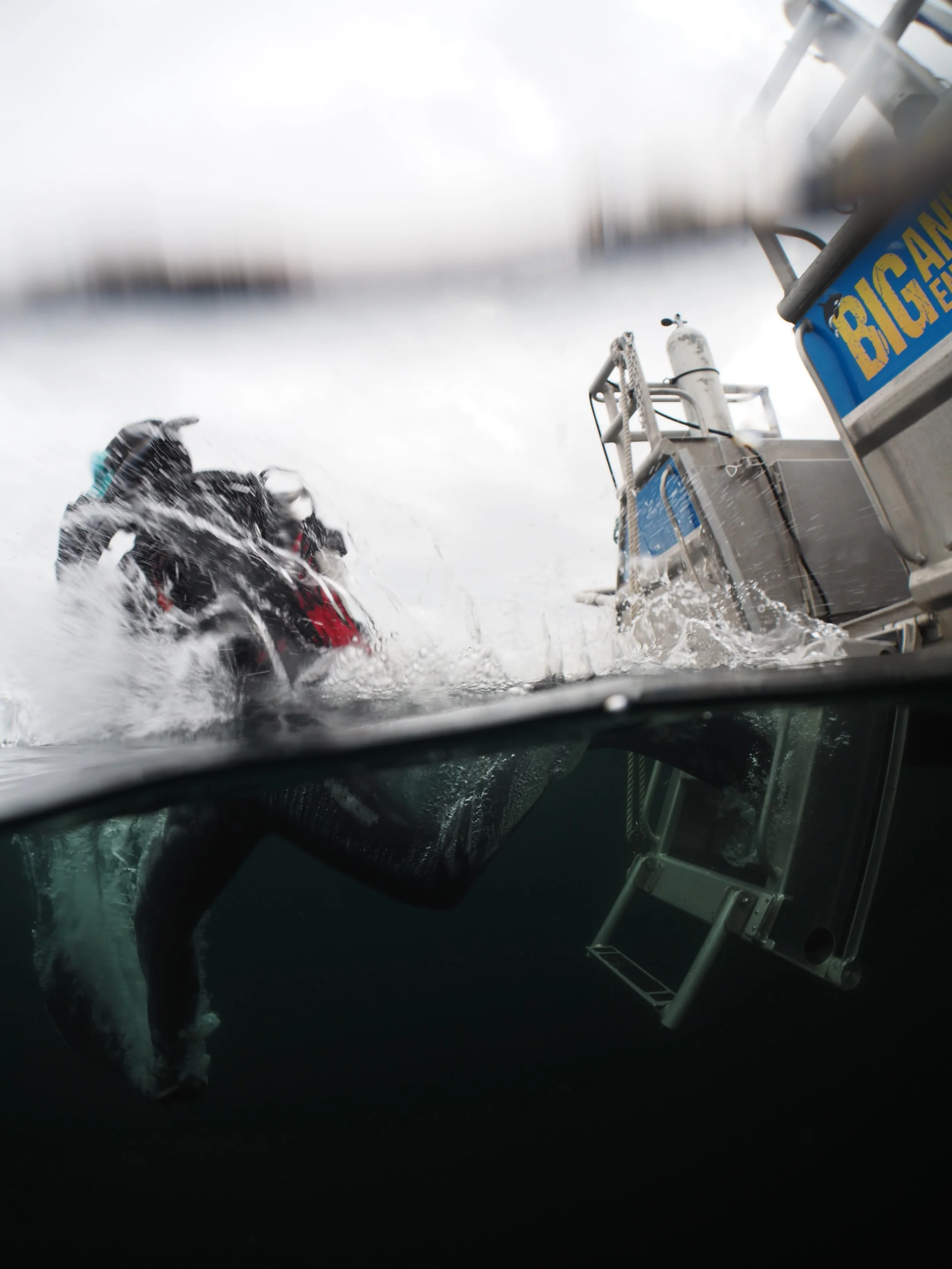
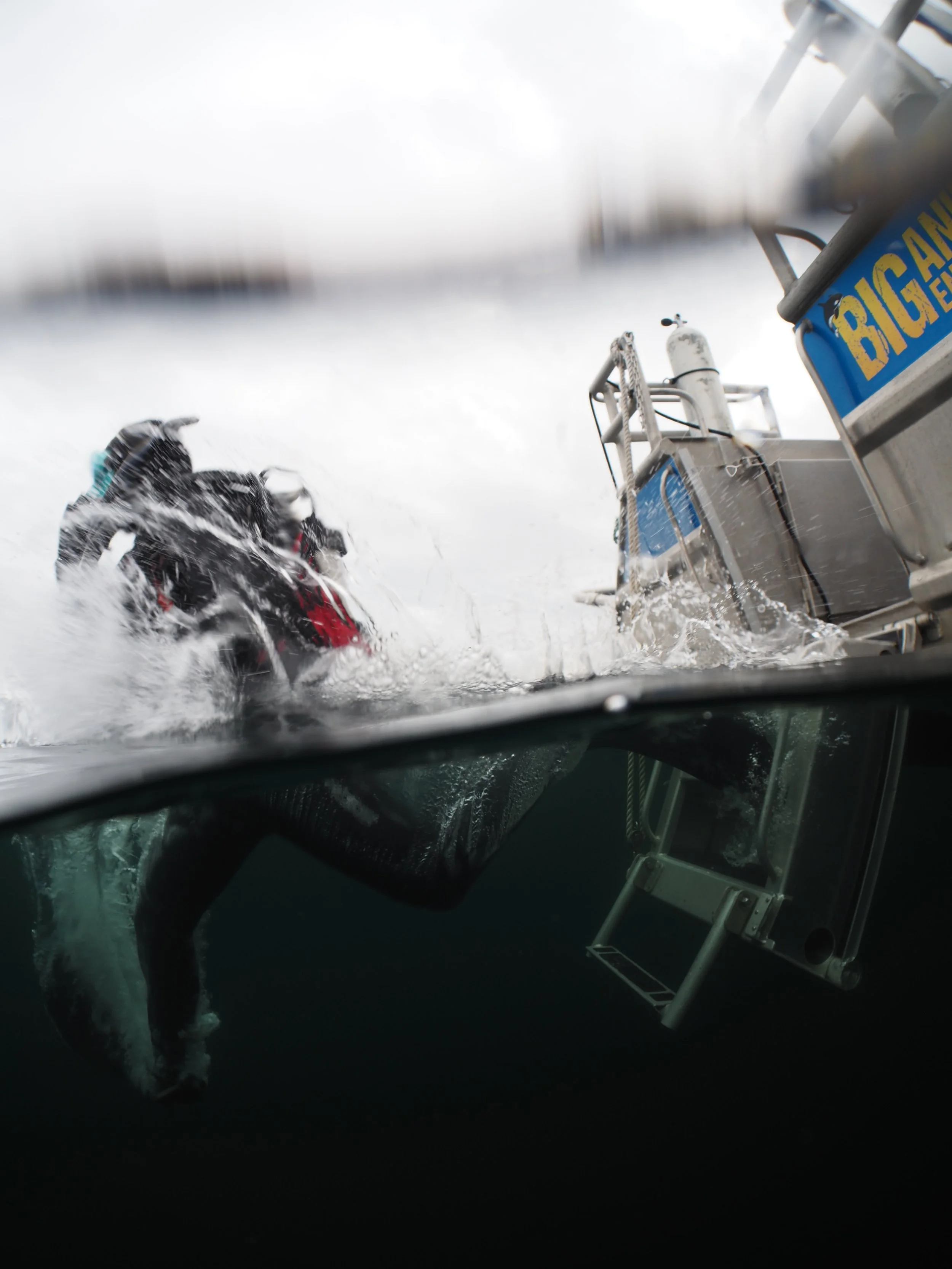
Boat charter from Comox - Big Animal Encounters run the charter. I booked through Pacific Pro Dive
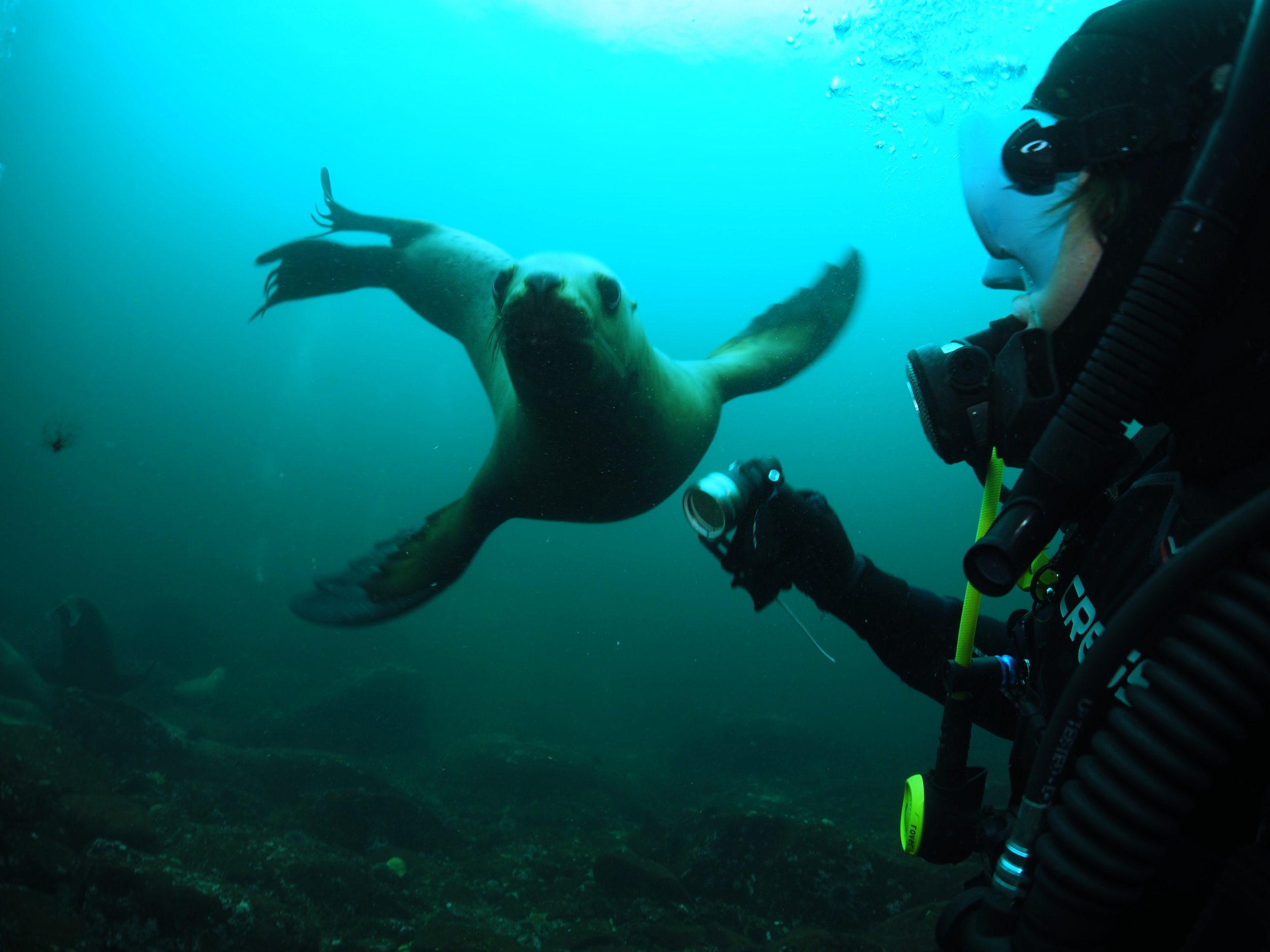
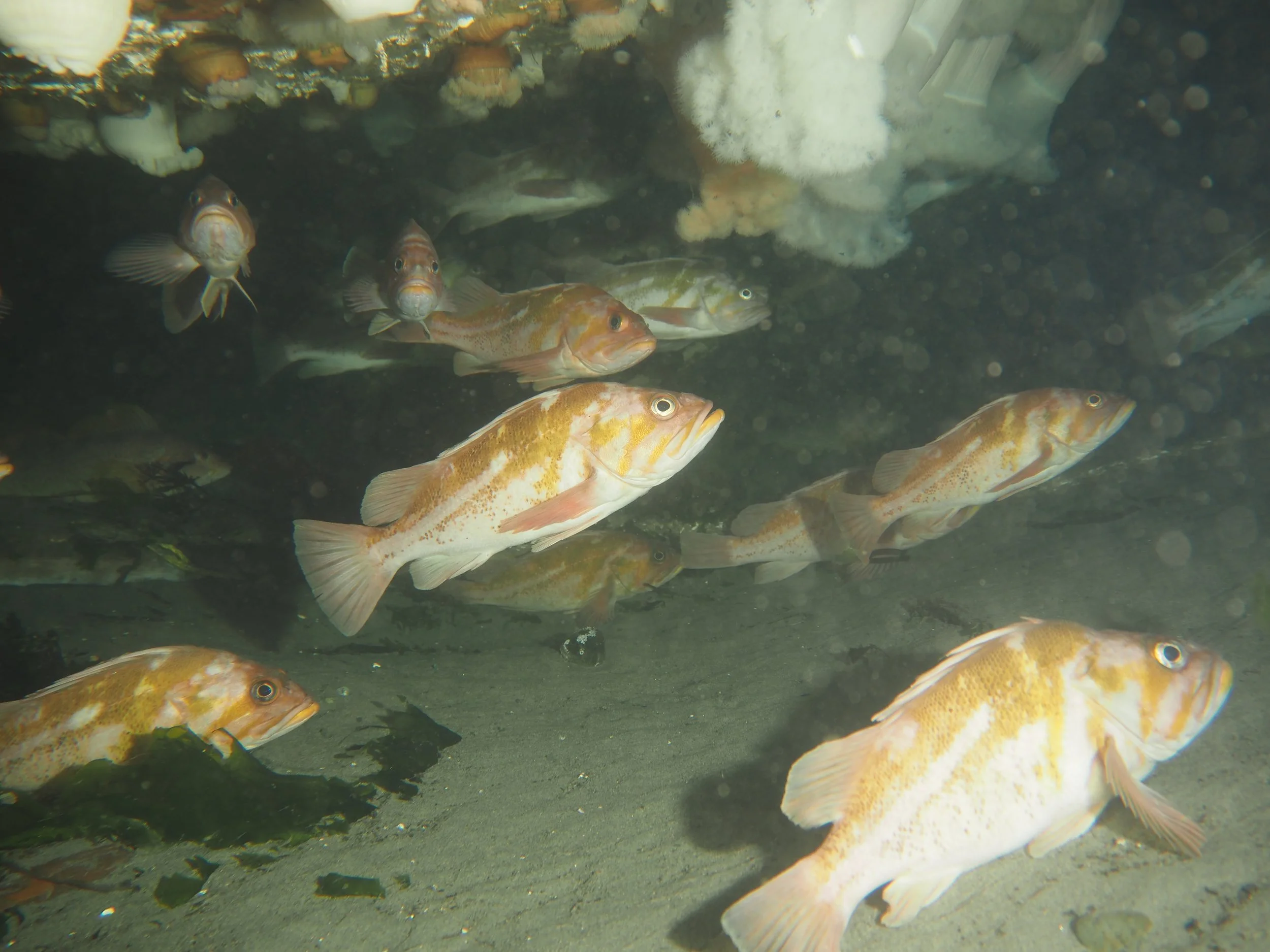
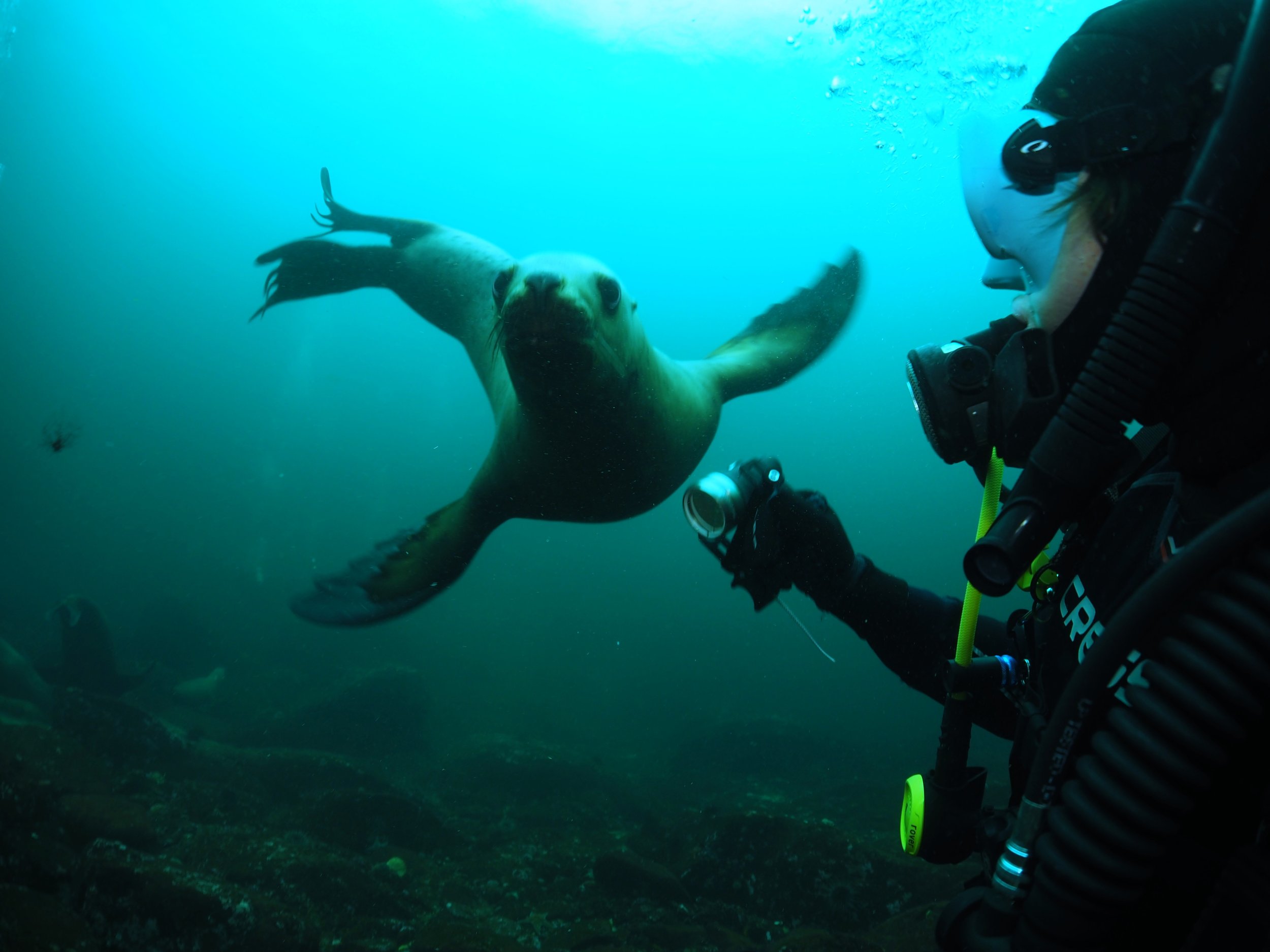
Sealion diving! The rocks are home to a huge sealion colony before/during the spring herring spawn. Best to dive it before the spawn while the vis. is still good - aim for March
The cheeky, inquisitive sealions will come to investigate you, lightly pulling at your fins, your drysuit, or even your hood. Despite being a highly experienced diver, I was nervous before my first sealion dive. But they are very gentle with you and it was such a joy
Often paired with a wall dive at Heron Island for the 2nd dive. This wall is full of life! I saw my first wolf eels here
Argonauts Wharf
Campbell River
Shore entry - a small parking lot at the beach provides easy access. Fin out along the wharf, and then follow the structure left or right, horizontally to shore
The wharf is a working dock, so be aware of potential for ship presence. The current here can be VERY strong - consult the Campbell River & Seymour Narrows tide tables and schedule diving for slack tide. Remain vigilent to changing current. It is highly recommended to hire an experienced dive guide for this site
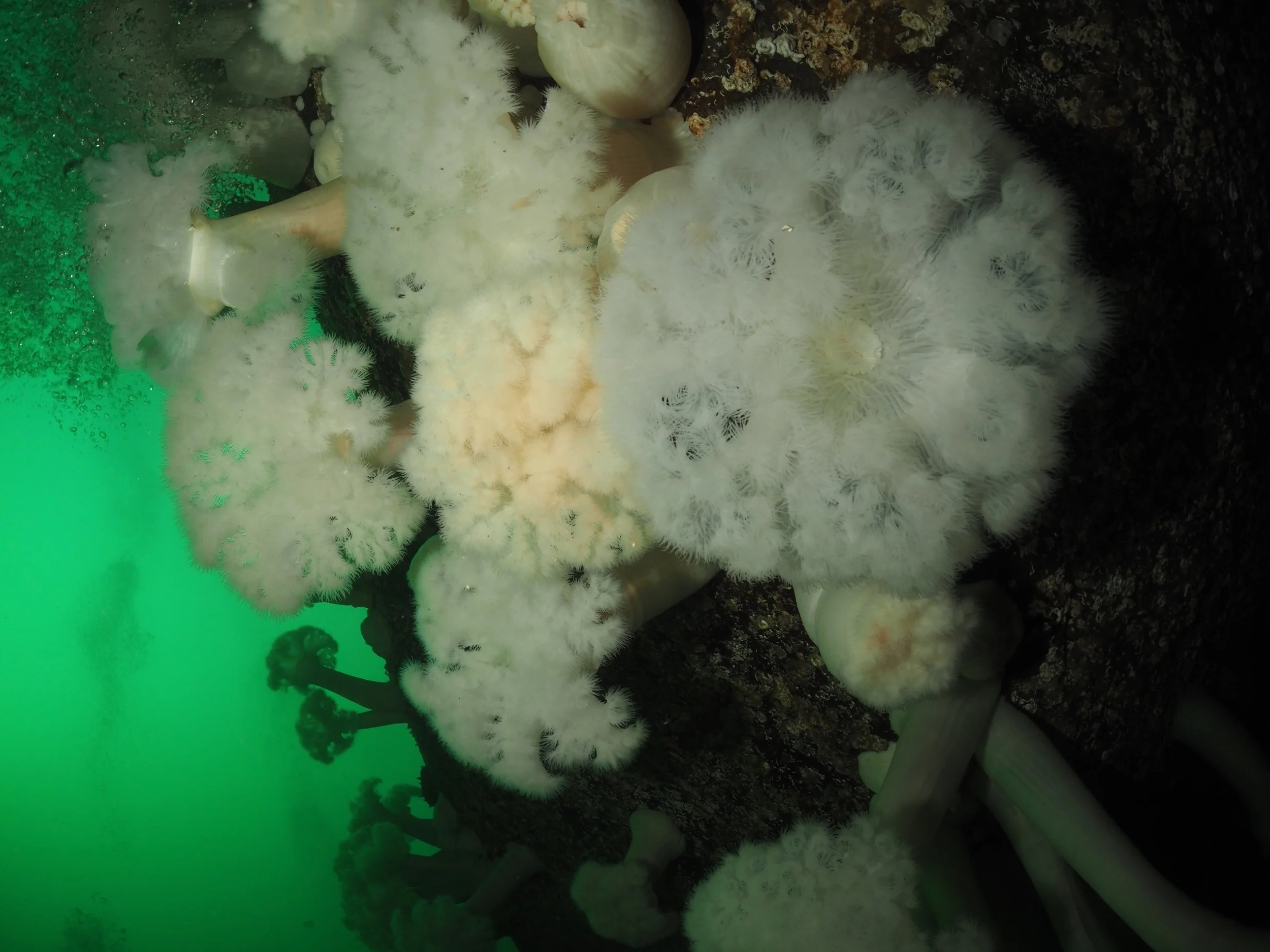
Expect to see the pillars covered in beautiful anemones and starfish, octopus at he bases, and lingcod, rockfish, sculpins and nudibranch.
North Island
God’s Pocket
Resort - boat diving
God’s Pocket Resort is located on Hurst Island, a short distance off from Port Hardy. You’ll be surrounded by true British Columbia coastal wilderness, with plenty of top-side wildlife watching to keep you busy on your SI
The resort is rustic and off-grid and can be a little expensive. But the diving is very much worth it (so I hear)
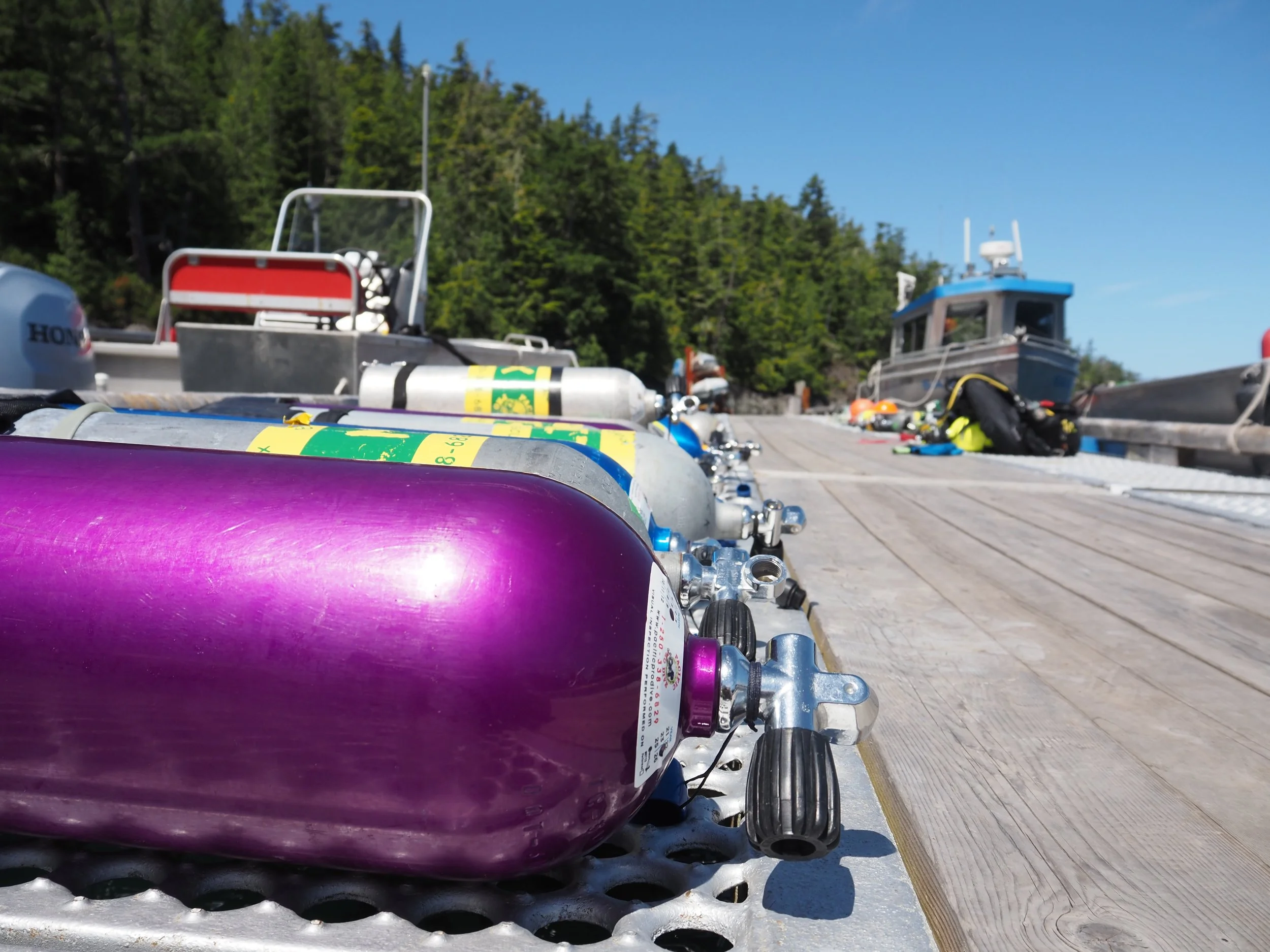
Easy access to the world-class Browning Pass dive site where you can see red soft corals, yellow sponges, colourful fish and nudibranchs - as colourful as any tropical reef. You can also experience diving in beautiful kelp forests
-
I lived in Canada for 13 years, and spent 3 years of that on Vancouver Island (until mid-2025) so I have dived many of these dive sites many times. I absolutely love the diving on Vancouver Island - from eelgrass meadows hiding juvenile fish and nudibranchs, to rock walls covered in giant anemones and sea stars, to the wild kelp forests, there is so much to see and explore. As I lived in the Comox Valley, I primarily dived at Nanoose Bay (Tyee, Oak Leaf, Madrona). Although these sites are usually easy dive conditions for beginner divers, I always enjoyed coming back to them for the sheer abundance of fish and invertebrate life to see, as well as the easy shore entry and facilities. And searching for Giant Pacific Octopus and Wolf Eels never gets old! And, if you’re lucky, you might even spot Orcas or Humpback Whales from the beach after the dive (in the distance, out in the Strait of Georgia).
I actually ended up working for a while as a casual PADI Instructor at Pacific Pro Dive in Courtenay. Although I earned my Instructor certification whilst working at a dive shop in Manitoba (that’s about as far from the ocean as you can get in Canada. I know….what was I thinking!), it had been 7 years since I had taught, so I got to experience the mentorship of Pacific Pro Dive’s highly experienced Instructors as they got me ready to instruct out on my own again. I cannot recommend Pacific Pro Dive enough - not only are the Instructors, Guides, and Management highly knowledgeable and skilled, they also welcome all new and experienced divers and you quickly feel like part of the Pacific Pro family!
Some of my highlights of diving Vancouver Island include the sealion dive at Norris Rocks, and even the wall dive afterwards for the 2nd dive of the charter - there was so much colourful invertebrate life and I found my one and only candystripe shrimp at the base of an anemone here (if you don’t know what they look like - google them. They look like a coral reef shrimp, but we have them in our cold Canadian waters - so neat!). Another highlight is seeing chimera (a.k.a. ratfish) off northern Vancouver Island - they are such a cool, prehistoric looking fish. Seeing Giant Pacific Octopus are always a highlight for divers here, but for me my most special memory is the small GPO I saw on the wall at Madrona Point, who was sitting outside of it’s hole, and seemed as curious about my buddy and I as we were about it. I reached out a hand and placed it near the little octopus, and it reached out a tentacle and felt all over my glove for a good 30 seconds.
Overall, I highly recommend Vancouver Island as a dive destination. If you are in Vancouver, or Washington State, it’s well worth the ferry hop over to the Island to get some dives in. While diving around Vancouver/Howe Sound is also great, you’re only going to get the regular sealion encounters and kelp forests over on the Island. Also, there’s so many fun land based activities to do on the Island. You may just never want to leave..